
What Is the Difference Between Stretch Film vs Shrink Wrap?
Introduction
Stretch film and shrink wrap are often confused because both are plastic packaging films used to protect products. However, they work in very different ways.
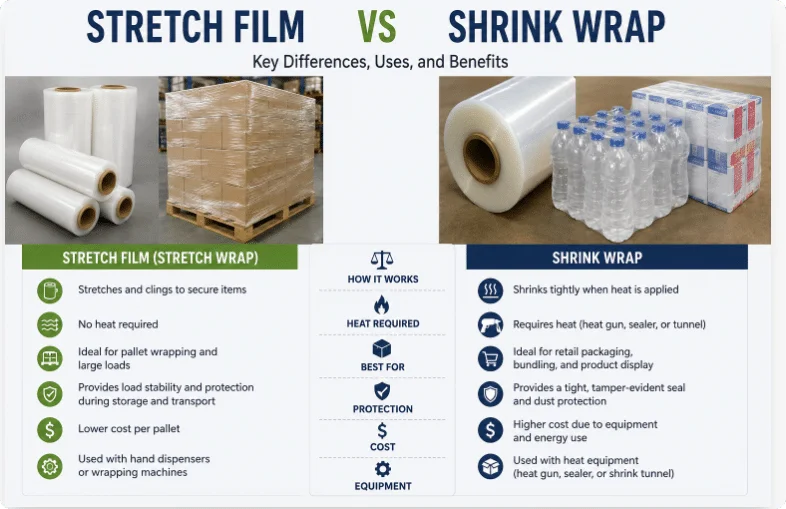
Stretch film secures products by elastic tension. It is stretched around cartons, boxes, or pallets and holds the load tightly without heat. Shrink wrap protects products by heat shrinking. It is loosely placed around an item first, then heated until it contracts around the product.
For packaging buyers, choosing between stretch film and shrink wrap depends on the packaging purpose. If you need pallet stability for shipping and warehousing, stretch film is usually the better choice. If you need tight product coverage for retail display, bundling, or tamper protection, shrink wrap may be more suitable.
This guide explains the main differences between stretch film and shrink wrap, so importers, distributors, factories, warehouses, and logistics companies can select the right packaging material.
What Is Stretch Film?
Stretch film, also called stretch wrap, is a highly stretchable plastic film mainly used to wrap pallets, cartons, boxes, furniture, appliances, and industrial goods. It is commonly made from LLDPE and is designed to stretch around a load while creating strong holding force.
Stretch film does not require heat. It works through tension, cling, and film recovery. When the film is wrapped around a pallet, it pulls the goods together and helps prevent shifting during storage and transportation.
For pallet packaging, you can explore JYE’s stretch film solutions and hand stretch film options.
Common types of stretch film include:
- Hand stretch film
- Machine stretch film
- Pallet stretch film
- Transparent stretch wrap
- Colored stretch film
- Heavy-duty stretch film
- Pre-stretched film
- Industrial wrapping film
Stretch film is widely used in logistics, warehousing, export shipping, manufacturing, building materials, furniture packaging, food and beverage distribution, and e-commerce fulfillment.
What Is Shrink Wrap?
Shrink wrap is a plastic film that shrinks tightly around a product after heat is applied. It is often used for individual product packaging, retail packs, printed boxes, food trays, bottle bundles, books, electronics, and consumer goods.
Unlike stretch film, shrink wrap needs heat equipment such as a heat gun, shrink tunnel, or heat sealer. The film is first placed around the product. After heating, it contracts and forms a tight protective layer.
Shrink wrap is often selected when appearance, product visibility, dust protection, and tamper evidence are important. It is common in retail packaging, food packaging, display packaging, and promotional bundles.
Stretch Film vs Shrink Wrap: Main Differences
| Comparison Point | Stretch Film | Shrink Wrap |
|---|---|---|
| Working method | Stretches around the load by tension | Shrinks around the product by heat |
| Heat required | No | Yes |
| Main use | Pallet wrapping and load stabilization | Product protection and retail packaging |
| Common equipment | Hand dispenser or pallet wrapping machine | Heat gun, heat sealer, or shrink tunnel |
| Best for | Warehousing, logistics, export pallets, industrial goods | Retail packs, bottles, food trays, small product bundles |
| Load stability | Excellent for palletized goods | Limited for heavy pallet stabilization |
| Appearance | Functional, transparent or colored | Tight, clean, retail-friendly finish |
| Cost focus | Lower cost per pallet and faster wrapping | Better display effect and product-level coverage |
| Typical buyers | Warehouses, factories, logistics companies, importers | Retail brands, food packers, consumer product manufacturers |
Difference 1: Stretch Film Uses Tension, Shrink Wrap Uses Heat
Stretch film is stretched around a pallet. Its elastic recovery creates holding force. This helps keep cartons, bags, or boxes together during movement.
Shrink wrap is heated after application. Heat causes the film to contract around the product surface. This creates a tight outer layer but does not provide the same pallet-holding force as stretch film.
For companies that wrap many pallets every day, stretch film is usually more efficient because it does not require heat processing.
Difference 2: Stretch Film Is Better for Pallet Wrapping
Stretch film is designed for load unitization. That means it turns multiple cartons or products into one stable pallet load.
It helps protect goods against:
- Pallet shifting
- Carton movement
- Dust
- Moisture exposure
- Surface scratches
- Transportation vibration
- Warehouse handling damage
This is why pallet stretch film is widely used in export shipping and logistics. For industrial applications, JYE also supplies wrapping film for broader protective packaging needs.
Shrink wrap can cover products tightly, but it is not usually the first choice for securing heavy pallet loads.
Difference 3: Shrink Wrap Is Better for Retail Presentation
Shrink wrap is often used when product appearance matters. After heating, the film fits tightly around the product and provides a clean packaging finish.
It is commonly used for:
- Bottled products
- Food trays
- Gift packs
- Printed boxes
- Books and magazines
- Electronics accessories
- Multipack retail bundles
If the goal is shelf presentation or tamper-evident packaging, shrink wrap may be more appropriate than stretch film.
Difference 4: Equipment Requirements Are Different
Stretch film can be applied manually or by machine.
Manual wrapping usually requires only a hand dispenser. Machine wrapping uses semi-automatic or automatic pallet wrappers. This makes stretch film flexible for both small warehouses and high-volume packaging lines.
Shrink wrap requires heat. Depending on production volume, buyers may need a heat gun, L-sealer, sleeve wrapper, or shrink tunnel. This can increase equipment cost, energy use, and process complexity.
For warehouses and factories that mainly handle palletized goods, stretch film is usually easier to integrate into daily operations.
Difference 5: Cost Structure Is Different
Stretch film and shrink wrap should not be compared only by roll price. Their cost structures are different.
Stretch film cost depends on:
- Film thickness
- Width and length
- Stretch ratio
- Roll weight
- Load-holding force
- Wrapping method
- Number of pallets wrapped per roll
Shrink wrap cost depends on:
- Film material
- Film size
- Shrink ratio
- Sealing method
- Heat equipment
- Energy consumption
- Labor and production speed
For pallet packaging, stretch film often provides a lower total cost because it can secure large loads quickly with less equipment. For retail packaging, shrink wrap may justify the cost because it improves product presentation and individual protection.
Difference 6: Sustainability Considerations
Packaging decisions should consider material use, damage prevention, recycling options, and total supply chain efficiency. The U.S. EPA notes that packaging is widely used to wrap and protect goods, and that understanding packaging production and disposal is important for economic and environmental decisions.
For businesses, the most practical approach is to avoid over-packaging while still preventing product damage. Damaged goods also create waste. The right stretch film can reduce unnecessary film usage by matching film thickness, stretch performance, and load requirements.
For broader packaging sustainability reference, see the EPA’s guide to sustainable packaging and its data on containers and packaging waste.
When Should You Use Stretch Film?
Choose stretch film when your main goal is to stabilize and protect palletized goods.
Stretch film is suitable for:
- Pallet wrapping
- Export shipping
- Warehouse storage
- Carton unitization
- Furniture protection
- Appliance packaging
- Building materials
- Industrial product handling
- Logistics and distribution centers
For B2B buyers, stretch film is often the more practical choice when products need to move safely through warehouses, trucks, containers, and distribution networks.
When Should You Use Shrink Wrap?
Choose shrink wrap when your main goal is to tightly cover individual products or retail bundles.
Shrink wrap is suitable for:
- Retail display packaging
- Product bundling
- Food tray packaging
- Bottle multipacks
- Small box protection
- Tamper-evident packaging
- Dust protection for consumer goods
Shrink wrap is less focused on pallet load stability and more focused on product-level appearance and protection.
Can Stretch Film Replace Shrink Wrap?
In some transport packaging situations, yes. For example, if the goal is only to hold cartons together on a pallet, stretch film is usually a better and more cost-effective solution.
However, stretch film cannot fully replace shrink wrap when the packaging requires heat-shrunk product coverage, retail presentation, or tamper-evident sealing.
Can Shrink Wrap Replace Stretch Film?
Usually not for pallet wrapping. Shrink wrap can cover goods, but it does not provide the same elastic holding force and wrapping efficiency for heavy pallet loads.
For export pallets, warehouse handling, and logistics transportation, stretch film remains the preferred solution.
Why Work with Foshan JYE Packaging Materials Co., Ltd?
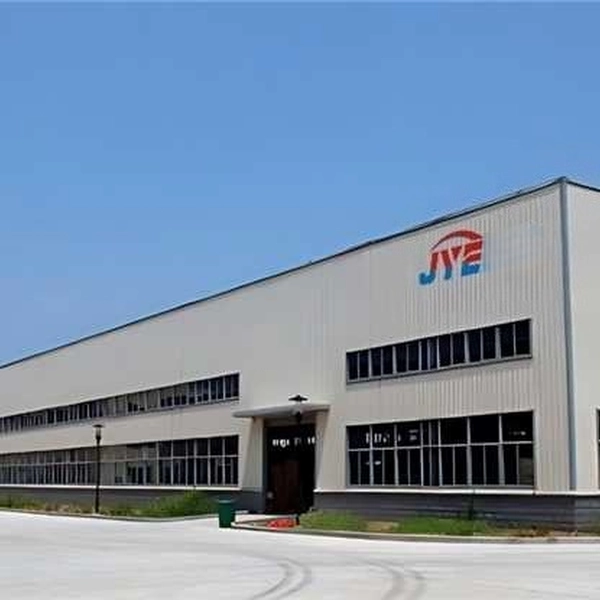
Foshan JYE Packaging Materials Co., Ltd is a professional stretch film and stretch wrap manufacturer based in Foshan, Guangdong, China. The company focuses on practical packaging solutions for importers, distributors, logistics companies, warehouses, and industrial customers.
JYE supplies a wide range of stretch film and wrapping film products, including:
- Hand stretch film
- Machine stretch film
- Pallet stretch film
- Stretch wrap
- Transparent stretch wrap
- Colored stretch film
- Heavy-duty pallet wrap
- Industrial wrapping film
- Pallet wrapping film
- Plastic wrapping film
- Customized packaging film
JYE supports customized production based on customer packaging requirements. Available customization options include film thickness, width, roll length, roll weight, color, core size, carton design, pallet packing, private label packaging, and OEM packaging.
The company’s Foshan production base is equipped for stable stretch film manufacturing and wholesale supply. With factory-direct support, flexible specifications, quality control, and export service experience, JYE helps customers reduce packaging risk and improve pallet wrapping efficiency.
If your business needs reliable stretch film for pallet packaging, warehouse storage, logistics transport, or industrial wrapping, contact JYE for a customized solution.
FAQ
Is stretch film the same as shrink wrap?
No. Stretch film stretches around a load and holds it by tension. Shrink wrap contracts around a product after heat is applied.
Does stretch film need heat?
No. Stretch film does not need heat. It is applied by hand or pallet wrapping machine.
Does shrink wrap need heat?
Yes. Shrink wrap requires heat from a heat gun, sealer, or shrink tunnel to shrink tightly around the product.
Which is better for pallet wrapping?
Stretch film is usually better for pallet wrapping because it provides load stability, holding force, and fast wrapping efficiency.
Which is better for retail packaging?
Shrink wrap is often better for retail packaging because it creates a tight, clean, product-level finish.
What is the best film for export pallets?
For export pallets, LLDPE stretch film, pallet stretch film, or heavy-duty stretch wrap is usually recommended. The right thickness depends on cargo weight, pallet shape, transport distance, and handling conditions.
Stretch film and shrink wrap are not the same. Stretch film is designed for pallet stability, logistics handling, warehouse storage, and export shipping. Shrink wrap is designed for heat-shrunk product protection, retail presentation, and small product bundling.
For businesses that need to secure cartons, boxes, furniture, appliances, or industrial goods on pallets, stretch film is usually the more practical and cost-effective choice.
Foshan JYE Packaging Materials Co., Ltd provides customized stretch film and wrapping film solutions for global buyers. Whether you need hand stretch film, machine stretch film, pallet stretch film, or industrial wrapping film, JYE can help you match the right film to your packaging operation.
As a professional manufacturer of stretch film, Foshan JYE Packaging Materials Co., Ltd. focuses on providing various effective product packaging protection solutions for the packaging industry. No matter what specifications of stretch film you are looking for, we can provide customized solutions to meet your needs.
Request a quote from Foshan JYE Packaging Materials Co., Ltd today and get a customized stretch film solution for your business.