

How to Choose Stretch Film for Pallet Packaging | Buyer’s Guide
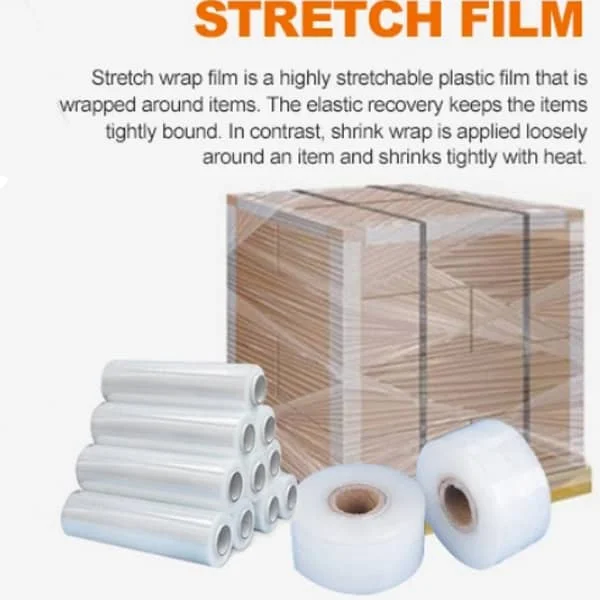
Meta Description: Learn how to choose stretch film for pallet packaging. Compare hand wrap, machine film, thickness, puncture resistance, holding force, and total cost.
Stretch film for pallet packaging
Related Products: pallet stretch wrap, LLDPE stretch film, hand stretch film, machine stretch film, pallet wrapping film
How to Choose Stretch Film for Pallet Packaging: A Buyer’s Guide
Choosing the right stretch film for pallet packaging is not simply a matter of selecting the thickest roll or the lowest price. The correct film should keep your products stable during storage and transportation while controlling material usage, labor costs, and packaging waste.
Most pallet stretch films are made from linear low-density polyethylene, commonly known as LLDPE. Depending on the formulation and manufacturing process, stretch cling film can provide holding force, consistent cling, stretchability, and resistance to tearing or punctures. following steps to identify the best pallet wrap for your operation.
1. Start with Your Pallet Load Profile
Before comparing film specifications, review the products you need to wrap. A stable pallet of uniform cartons has different requirements from an irregular load containing sharp corners, heavy components, or mixed-size boxes.
Ask these questions:
- What are the average and maximum pallet weights?
- Are the cartons uniform, uneven, or loosely stacked?
- Do any products have sharp edges or protrusions?
- Will the pallets travel short distances or through complex distribution networks?
- Are the loads stored outdoors, in cold conditions, or in dusty environments?
For light, uniform loads, a standard LLDPE film may be sufficient. Heavy or irregular pallets generally require stronger holding force and better puncture resistance. Corner protectors can also help reduce film damage when cartons have sharp edges.
2. Choose Hand Stretch Film or Machine Stretch Film
The correct wrapping method depends on your packaging volume and equipment.
Hand stretch film is suitable for warehouses with lower pallet volumes, multiple packing locations, or loads that need to be wrapped in different areas. It is also useful for occasional shipments and small distribution centers.
Machine stretch film is designed for stretch-wrapping equipment. It is generally the better choice for repetitive, high-volume operations because the wrapping process can be standardized more easily.
When comparing pallet stretch wrap, consider:
- Stretch performance
- Load containment and holding force
- Puncture resistance
- Tear resistance
- Cling between film layers
- Elastic recovery after stretching
- Film usage per pallet
ASTM publishes recognized guides and test methods for stretch-film applications. These include guidance for the use of stretch films, peel-cling measurement, vibration testing, horizontal-impact testing, and performance testing of applied stretch film. r, high-performance film may reduce material usage while maintaining pallet stability. However, down-gauging should always be verified through controlled trials using your actual pallet loads.
4. Match the Film to the Shipping Risk
Different supply chains create different packaging risks.
For local deliveries with stable boxed goods, a general-purpose hand or machine film may work well. For heavy products, tall pallets, or long-distance transportation, prioritize holding force and load containment.
For products with sharp corners, use puncture-resistant film and consider edge protectors. ASTM specifically recognizes protrusion puncture resistance as an important area of stretch-film performance evaluation. idential shipments or products exposed to sunlight, dust, or visual identification requirements, colored or opaque stretch film may also be useful. Confirm that the selected film remains compatible with warehouse scanning, inspection, and receiving processes.
5. Compare Cost per Pallet, Not Cost per Roll
The lowest roll price does not always produce the lowest packaging cost.
A practical comparison should include:
- Number of pallets wrapped per roll
- Film weight used per pallet
- Number of wrap rotations required
- Labor time per pallet
- Product damage during transportation
- Film breakage during application
- Packaging waste
Run a trial using representative pallets. Keep the wrapping method, overlap, pallet size, and transport route consistent. Then compare load stability and total film consumption.
6. Request Clear Information from Your Supplier
A reliable stretch-film supplier should provide clear product data and help you test the film before placing a large wholesale order.
Request the following details:
- Material type and film grade
- Film width, length, and thickness
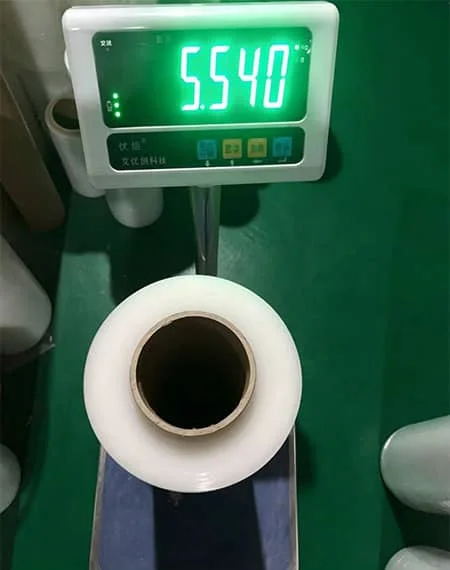
- Net film weight and core size
- Recommended application method
- Stretch or pre-stretch guidance
- Sample rolls for testing
- Technical data sheets
- Available packaging and pallet quantities
The best stretch film for pallet packaging is the film that protects your products consistently at the lowest verified total cost per pallet. Start with your load profile, select the right application method, and validate the final specification through a real-world trial.
FAQ
What is the best stretch film for pallets?
The best option depends on the pallet weight, load shape, transport conditions, and wrapping method. Uniform cartons may use standard LLDPE film, while heavy or irregular loads often need stronger holding force and puncture resistance.
Is hand stretch film suitable for wholesale shipping?
Yes. Hand stretch film works well for lower-volume operations and flexible packing areas. For continuous high-volume wrapping, machine stretch film is usually more efficient.
Can thinner stretch film reduce packaging costs?
Yes, but only when it maintains the required load containment. Test thinner films on representative pallets before changing your packaging specification.