
What Micron Stretch Film Is Best for Pallet Wrapping?
Choosing the right micron stretch film for pallet wrapping is not simply a matter of selecting the thickest film available. In real warehouse and export packaging, the best stretch film thickness depends on pallet weight, load shape, transport distance, wrapping method, puncture risk, and the required balance between film cost and load stability. For most businesses, the correct answer is not one fixed number, but a practical range: 15–17 micron for light loads, 20–23 micron for standard pallet wrapping, and 25–30 micron or above for heavy-duty or irregular cargo.
Core Keywords
what micron stretch film is best for pallet wrapping, stretch film thickness, pallet wrapping film, LLDPE stretch film, hand stretch film, machine stretch film, 20 micron stretch film, 23 micron stretch film, heavy duty stretch wrap, industrial pallet wrapping film, stretch film manufacturer, China stretch film supplier
Why Stretch Film Micron Matters
Micron refers to the thickness of the stretch film. One micron is one thousandth of a millimeter. In pallet wrapping, thickness affects puncture resistance, holding force, tear resistance, and film consumption. A thicker film usually provides better resistance against sharp corners and heavy cargo movement, but it also increases material cost. A thinner film may reduce cost per pallet, but if it breaks during wrapping or fails during transport, the actual cost becomes higher.
This is why buyers should avoid one common mistake: choosing stretch film only by price per roll. A cheaper roll may contain less film, lower stretch performance, or insufficient thickness for the load. The better purchasing question is: which micron film can secure the pallet with the lowest total packaging cost and acceptable transport safety?
15–17 Micron Stretch Film: Best for Light Pallets
For light and uniform pallet loads, 15–17 micron stretch film is usually enough. This thickness range is suitable for cartons, tissue products, light consumer goods, e-commerce warehouse packing, and stable boxes with no sharp edges.
The advantage of 15–17 micron film is lower material consumption. It is easier for manual wrapping and reduces operator fatigue when used as hand stretch film. However, it is not ideal for heavy products, metal parts, building materials, irregular cartons, or export cargo exposed to rough handling.
Use 15–17 micron stretch film when:
- Pallet weight is light
- Boxes are regular and stable
- There are no sharp edges
- Storage and transport distance is short
- The goal is economical daily warehouse wrapping
20 Micron Stretch Film: The Standard Choice for Most Pallet Wrapping
For general warehouse use, 20 micron stretch film is often the safest starting point. It provides a practical balance between cost, stretchability, puncture resistance, and load-holding performance. Many standard pallet wrapping applications use 20 micron film because it can handle medium-weight pallets without excessive material usage.
For importers, distributors, factories, and logistics companies, 20 micron LLDPE stretch film is suitable for cartons, food and beverage packaging, household goods, plastic products, daily-use products, and general industrial shipments. It can be used for both manual wrapping and machine wrapping, depending on roll width, core size, and equipment compatibility.
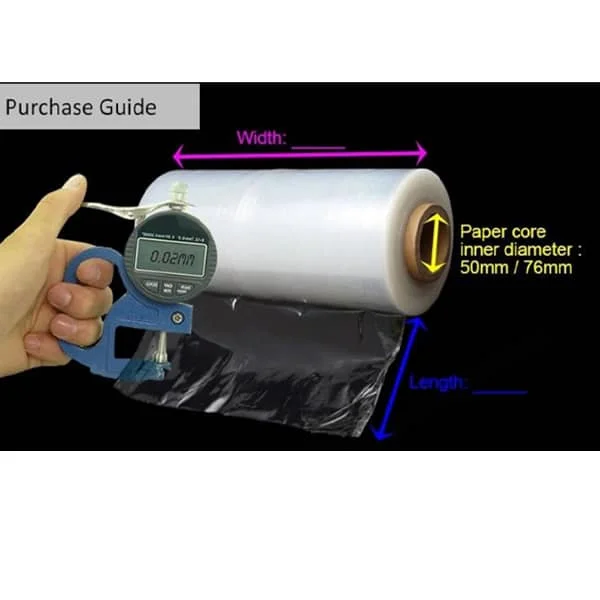
Foshan JYE Packaging Materials Co., Ltd supplies stretch film for B2B packaging applications, including hand stretch film, machine stretch film, pallet stretch film, and industrial wrapping film. For buyers who need a practical standard specification, 500 mm width, 20 micron thickness, and 3-inch core is a common option for pallet wrapping, especially when matching semi-automatic or automatic wrapping machines.
23 Micron Stretch Film: Better for Export Pallets and Higher Holding Force
If your pallets are shipped over long distances or handled several times during loading, unloading, warehousing, and distribution, 23 micron stretch film can be a better choice than 20 micron. The difference may look small, but the additional thickness improves tear resistance and load containment.
23 micron stretch film is commonly selected for export packaging, medium-heavy cartons, furniture components, appliances, and goods that require stronger pallet stability. It is also useful when the pallet has slight irregularity or when operators need extra safety margin during manual wrapping.
For manual warehouse packing, JYE product specifications include practical options such as 450 mm or 500 mm width, 23 µm thickness, 3-inch paper core, and carton or pallet packaging. This type of product structure is suitable for distributors and wholesalers who need flexible roll sizes for different end users.
25–30 Micron Stretch Film: For Heavy-Duty Pallet Wrapping
For heavy pallets, sharp-edged cargo, unstable loads, or long-distance export shipping, 25–30 micron stretch film is more appropriate. This thickness range is designed for higher puncture resistance and stronger load protection. It is often used for hardware, tiles, machinery parts, building materials, chemicals, drums, and irregular industrial cargo.
The disadvantage is higher film cost per roll. However, for high-risk cargo, the cost of product damage is usually much higher than the additional cost of stronger film. If the film breaks during wrapping or the pallet shifts during transport, using thinner film is a false economy.
Choose 25–30 micron stretch film when:
- Pallet loads are heavy
- Cargo has sharp corners or uneven surfaces
- Pallets are stacked high
- Transport involves export shipping
- Loads require stronger holding force
- Film breakage happens frequently with 17–20 micron film
40–50 Micron Stretch Film: Specialized Industrial Use
For most normal pallet wrapping, 40–50 micron film is not necessary. It is too heavy and expensive for standard cartons. However, it can be useful for special industrial applications where puncture resistance, surface protection, or extreme load containment is required.
JYE industrial wrapping film includes a 20–50 micron range for warehouse storage, logistics transport, manufacturing facilities, furniture and appliance packaging, and building material packaging. This range is more suitable for buyers who need customized industrial packaging rather than ordinary daily pallet wrapping.
Hand Wrap vs Machine Wrap: Thickness Is Not the Only Factor
When choosing stretch film micron, wrapping method matters. Hand stretch film must be easy to pull, control, and apply. If the film is too thick, operators may use too little stretch or wrap inconsistently. For hand wrapping, 15–23 micron is common, while 25–30 micron is used only for heavier or more difficult loads.
Machine stretch film can usually handle higher stretch ratios and more consistent wrapping tension. For machine wrapping, buyers should check width, core size, roll weight, pre-stretch performance, and machine compatibility. A 20 micron machine stretch film with good stretch performance may outperform a thicker but lower-quality film.
Recommended Micron Selection Table
| Application | Recommended Micron | Typical Use |
| Light cartons and stable boxes | 15–17 µm | Daily warehouse wrapping, short-distance transport |
| General pallet wrapping | 20 µm | Standard cartons, logistics, factory use |
| Export pallets and medium-heavy goods | 23 µm | Higher load stability and better tear resistance |
| Heavy-duty or irregular cargo | 25–30 µm | Sharp edges, industrial cargo, long-distance shipping |
| Specialized industrial protection | 40–50 µm | Building materials, appliances, heavy industrial goods |
Final Answer: What Micron Stretch Film Is Best?
For most pallet wrapping applications, 20 micron stretch film is the best general-purpose choice. It provides a reliable balance of strength, cost, and wrapping efficiency. If the pallet is light and regular, 15–17 micron can reduce packaging cost. If the pallet is heavier, exported, or slightly irregular, 23 micron is a safer option. For heavy-duty cargo, sharp edges, or demanding transport conditions, 25–30 micron stretch film is more suitable.
Foshan JYE Packaging Materials Co., Ltd offers customizable LLDPE stretch film solutions for hand wrapping, machine wrapping, pallet packaging, and industrial logistics. Buyers can select different thicknesses, widths, lengths, roll weights, colors, and packaging formats according to pallet size, cargo type, wrapping method, and destination market.
The most practical rule is simple: do not buy stretch film by micron alone. Match the film thickness with load weight, pallet stability, wrapping equipment, puncture risk, and transport conditions. The best micron stretch film is the one that keeps the pallet secure while reducing total packaging cost.
As a professional manufacturer of stretch film, Foshan JYE Packaging Materials Co., Ltd. focuses on providing various effective product packaging protection solutions for the packaging industry. No matter what specifications of stretch film you are looking for, we can provide customized solutions to meet your needs.