

How Is Stretch Film Made? A Complete Guide for Packaging Buyers
Learn how is stretch film made, from raw material selection to extrusion, cooling, winding, and quality testing. See real packaging scenarios, common customer problems, and how to choose the right stretch film supplier.
Introduction
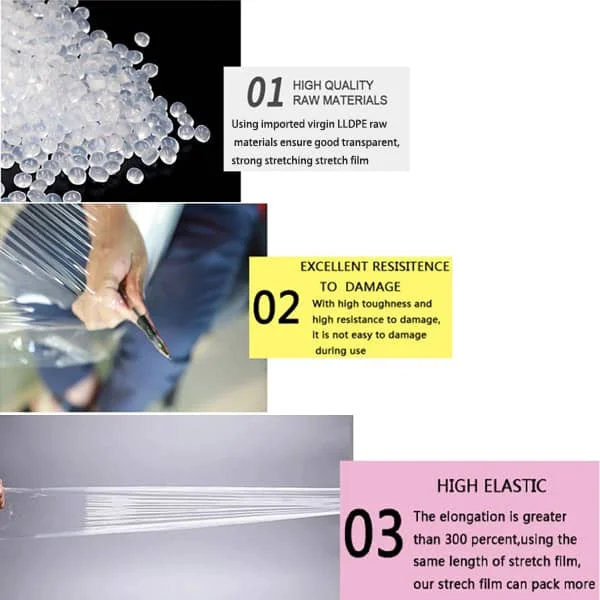
Stretch film is one of the most widely used packaging materials for pallet wrapping, warehouse storage, shipping protection, and industrial product bundling. For many buyers, it looks like a simple roll of plastic film. However, behind a high-quality stretch film roll is a precise manufacturing process involving raw material selection, extrusion technology, thickness control, cooling, winding, and strict quality inspection.
At Foshan JYE Packaging Materials Co., Ltd , we provide stretch film solutions for warehouses, logistics companies, manufacturers, exporters, distributors, and packaging wholesalers. Our goal is not only to supply film, but also to help customers solve real packaging problems.
What Is Stretch Film?
Stretch film, also called stretch wrap, is a highly stretchable plastic film commonly used to wrap products, cartons, and pallets. It is usually made from linear low-density polyethylene, also known as LLDPE.
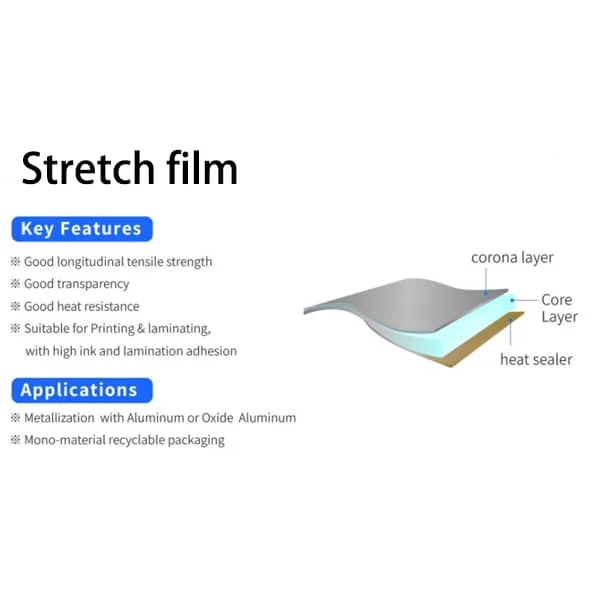
The film can stretch around goods and hold them tightly together. This makes it especially useful for palletized cargo, where stability, dust protection, moisture resistance, and transportation safety are important.
Common types of stretch film include:
Hand stretch film
Machine stretch film
Pre-stretched film
Jumbo roll stretch film
Colored stretch film
Black opaque stretch film
VCI stretch film for anti-rust packaging
UV-resistant stretch film for outdoor storage
How Is Stretch Film Made?
The stretch film manufacturing process generally includes several important steps: raw material preparation, extrusion, cooling, thickness control, edge trimming, winding, slitting, and quality testing.
1. Raw Material Selection
Most stretch film is made from LLDPE resin. Depending on the required performance, manufacturers may also use metallocene polyethylene, LDPE, HDPE, tackifier, anti-static additives, UV additives, color masterbatch, or other functional materials.
The choice of raw materials directly affects the film’s:
Stretchability
Puncture resistance
Tear resistance
Cling performance
Transparency
Load holding force
Thickness stability
Weather resistance
The logistics customer shipping heavy machinery needs stronger puncture resistance, while a food distribution warehouse may care more about transparency and clean wrapping performance.
At Foshan JYE Packaging Materials Co., Ltd , we select raw materials according to the customer’s packaging application, cargo weight, wrapping method, and transport conditions.
2. Feeding and Melting
After the raw materials are prepared, they are fed into the extruder. Inside the extruder, the plastic resin is heated and melted into a uniform liquid state.
Temperature control is very important at this stage. If the temperature is too low, the resin may not melt evenly. If it is too high, the material may degrade and affect film quality.
A stable extrusion process helps produce stretch film with consistent thickness, strength, and appearance.
3. Cooling on Chill Rollers
After leaving the die, the hot film is quickly cooled on chill rollers. This cooling process helps form the final physical properties of the film.
Fast and stable cooling can improve:
Film clarity
Surface smoothness
Thickness uniformity
Mechanical strength
Roll appearance
This is an important reason why high-quality cast stretch film usually has good transparency and smooth unwinding performance.
4. Thickness Control and Online Monitoring
During production, the film thickness must be carefully controlled. Stretch film thickness is often measured in microns or gauge.
If the thickness is uneven, customers may experience problems such as:
Film breaking during wrapping
Poor pallet stability
Excessive film consumption
Unstable machine wrapping
Customer complaints after delivery
Professional stretch film manufacturers use online monitoring systems and quality control procedures to keep the film consistent from roll to roll.
5. Winding Into Jumbo Rolls
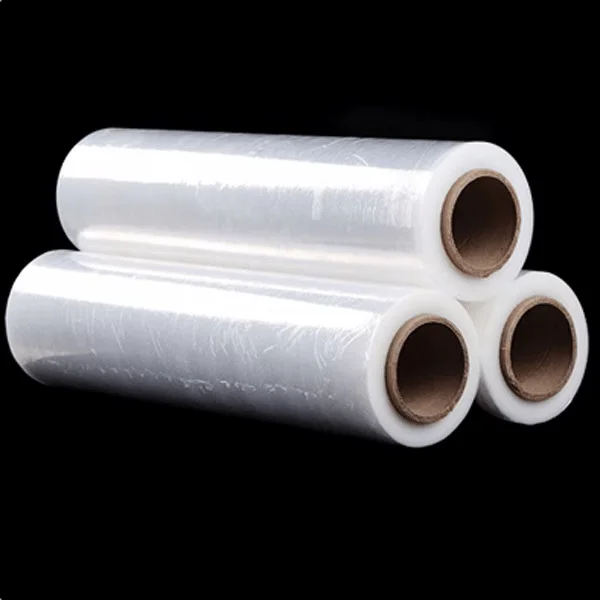
The film is first wound into large jumbo rolls. These jumbo rolls are then converted into different finished roll sizes according to customer requirements.
For example:
Hand roll: commonly used for manual pallet wrapping
Machine roll: used on semi-automatic or automatic wrapping machines
Mini roll: used for bundling small products
Jumbo roll: used by converters or packaging distributors
Good winding quality is essential. A poorly wound roll may cause wrinkles, telescoping, uneven tension, or machine wrapping problems.
7. Slitting and Rewinding
Jumbo rolls are slit and rewound into finished rolls with the required width, length, core size, and roll weight.
Common specifications include:
50 cm width hand stretch film
45 cm width stretch wrap
500 mm machine stretch film
20 micron, 23 micron, 25 micron, or customized thickness
Transparent, black, blue, green, or customized color
Paper core or extended core
At Foshan JYE Packaging Materials Co., Ltd , we support customized specifications for distributors, wholesalers, warehouses, factories, and export packaging customers.
8. Quality Testing Before Delivery
Before shipment, stretch film should pass several quality checks. Common testing items include:
Thickness measurement
Tensile strength
Elongation rate
Puncture resistance
Cling performance
Transparency
Roll weight
Roll width
Core strength
Packaging appearance
Quality testing ensures that the film performs well in real use, not just in the factory.
Cast Stretch Film vs. Blown Stretch Film
There are two common manufacturing methods for stretch film: cast extrusion and blown extrusion.
Cast Stretch Film
Cast stretch film is made through a flat die and cooled on chill rollers. It usually has:
High transparency
Quiet unwinding
Good thickness control
Smooth surface
High production efficiency
Competitive cost
It is widely used in warehouses, supermarkets, logistics centers, and general pallet wrapping.
Blown Stretch Film
Blown stretch film is made by blowing melted plastic into a bubble and cooling it with air. It usually has:
Strong puncture resistance
Higher tear strength
Better performance for irregular loads
Good holding force
It is often used for heavy-duty goods, sharp-edged products, construction materials, and challenging transport conditions.
| Specifications | |||
| Item | width (cm) | Length (m) | Weight(kg) |
| Stretch film | 6 | 100 | 200g |
| Stretch film | 8 | 110 | 300g |
| Stretch film | 12 | 130 | 400g |
| Stretch film | 15 | 150 | 1 |
| Stretch film | 20 | 160 | 1.3 |
| Stretch film | 25 | 180 | 1.65 |
| Stretch film | 30 | 200 | 1.8 |
| Stretch film | 35 | 220 | 2 |
| Stretch film | 45 | 230 | 2.3 |
| Stretch film | 45 | 350 | 3 |
| Stretch film | 45 | 390 | 3.3 |
| Stretch film | 45 | 480 | 4 |
| Stretch film | 45 | 550 | 4.5 |
| Stretch film | 45 | 600 | 5 |
| Stretch film | 50 | 230 | 2.3 |
| Stretch film | 50 | 300 | 2.8 |
| Stretch film | 50 | 350 | 3 |
| Stretch film | 50 | 390 | 3.3 |
| Stretch film | 50 | 600 | 5 |
| Stretch film | 60 | 330 | 3.8 |
| Stretch film | 70 | 350 | 4.5 |
| Stretch film | 80 | 360 | 6 |
| Stretch film | 100 | 350 | 6.8 |
| Stretch film | 100 | 500 | 9.5 |
Where Is Stretch Film Used?
Stretch film is used in many industries because it is simple, efficient, and cost-effective.
1. Warehouse and Logistics
Stretch film keeps cartons stable on pallets during storage and transportation. It helps prevent goods from falling, shifting, or being damaged during loading and unloading.
Customer problem solved: Pallets collapse during delivery.
Film solution: Use machine stretch film with stronger load holding force and proper pre-stretch performance.
2. Food and Beverage Industry
Beverage cartons, canned food, bottled water, and packaged food products are often wrapped with transparent stretch film.
Customer problem solved: Goods need to be visible and clean during distribution.
Film solution: Use high-clarity cast stretch film with good cling and stable wrapping.
3. E-Commerce and Distribution Centers
E-commerce warehouses need fast packaging, easy handling, and cost control. Stretch film helps bundle products and protect cartons before shipment.
Customer problem solved: Packaging speed is slow and film consumption is high.
Film solution: Use pre-stretched film or optimized machine film to reduce material waste.
4. Construction Materials
Tiles, pipes, boards, metal parts, and hardware products often have sharp corners or heavy weight.
Customer problem solved: Ordinary film tears easily on sharp edges.
Film solution: Use thicker stretch film or high-puncture-resistant film.
5. Export Packaging
Export cargo may experience long-distance transportation, humidity, temperature changes, and repeated handling.
Customer problem solved: Goods arrive with dust, moisture, or unstable pallets.
Film solution: Use stronger stretch film, black stretch film, or UV-resistant stretch film depending on the shipping environment.
How Stretch Film Solves Common Customer Problems
Problem 1: Film Breaks During Wrapping
Film breakage usually happens because of low-quality raw materials, uneven thickness, poor puncture resistance, or incorrect machine settings.
Solution: Choose stretch film with stable thickness, good elongation, and proper tensile strength. For machine wrapping, the film must match the machine’s pre-stretch ratio.
Problem 2: Packaging Cost Is Too High
Some customers think thicker film is always better, but this is not always true. A high-performance thinner film may reduce total packaging cost while maintaining pallet stability.
Solution: Test down-gauged stretch film or pre-stretched film to reduce film consumption per pallet.
Problem 3: Pallets Are Not Stable
If the film does not have enough holding force, goods may move during transportation.
Solution: Use the correct wrapping pattern, film thickness, and film grade. For heavy goods, machine stretch film with strong load retention is often recommended.
Problem 4: Goods Need Privacy or UV Protection
Some products should not be visible during transportation, while outdoor storage may require sunlight protection.
Solution: Use black stretch film, colored stretch film, or UV-resistant stretch film.
Problem 5: Manual Wrapping Is Tiring
Manual wrapping can be labor-intensive, especially in high-volume warehouses.
Solution: Use lighter hand rolls, pre-stretched film, or switch to machine stretch film for better efficiency.
Practical Customer Case Examples
Case 1: Logistics Company Reduced Film Breakage
A logistics customer was using low-cost hand stretch film for mixed pallet loads. Workers complained that the film broke frequently, especially when wrapping cartons with uneven edges.
After reviewing the customer’s cargo type and wrapping process, Foshan JYE Packaging Materials Co., Ltd recommended a stronger stretch film with better puncture resistance and more stable thickness.
Result:
The customer reduced film breakage, improved wrapping efficiency, and lowered complaints from warehouse workers.
Case 2: Beverage Distributor Improved Pallet Stability
A beverage distributor needed to ship heavy bottled water pallets. Their previous film looked thick, but the pallets still became loose during transport.
Result:
The pallets became more stable, transport damage was reduced, and the customer used less film per pallet.
Case 3: Export Customer Needed Privacy Protection
An export customer wanted to protect product information during international shipping. Transparent film could not meet their privacy requirement.
We supplied black stretch film with good opacity and strong wrapping performance.
Result:
The customer improved cargo privacy, protected goods from dust, and maintained a professional export packaging appearance.
How to Choose the Right Stretch Film
When choosing stretch film, buyers should consider:
Product weight
Pallet size
Sharp edges or regular cartons
Manual wrapping or machine wrapping
Indoor or outdoor storage
Required transparency
Privacy protection needs
Export shipping conditions
Target packaging cost per pallet
The best stretch film is not always the thickest or cheapest one. The best choice is the film that solves your packaging problem at the lowest total cost.
Why Choose Foshan JYE Packaging Materials Co., Ltd ?
Foshan JYE Packaging Materials Co., Ltd is a professional supplier of stretch film and flexible packaging solutions. We help customers select the right film according to real packaging scenarios, not only standard product specifications.
We can provide:
Jumbo roll stretch film
Pre-stretched film
Colored stretch film
Black stretch film
Customized width, thickness, length, and packaging
OEM and private label service
Export packaging support
Stable quality control
Fast production and delivery
If you are looking for reliable stretch film for warehouse, logistics, export, industrial, or retail packaging, Foshan JYE Packaging Materials Co., Ltd can provide customized solutions based on your actual application.
FAQ
1. What material is stretch film made from?
Most stretch film is made from LLDPE, which provides good stretchability, strength, and flexibility.
2. What is the difference between stretch film and shrink film?
Stretch film is stretched around products to hold them tightly. Shrink film needs heat to shrink around the product.
3. Is thicker stretch film always better?
Not always. A high-quality thinner film may provide equal or better performance while reducing packaging cost.
4. Can stretch film be customized?
Yes. Stretch film can be customized by thickness, width, length, color, core size, roll weight, packaging, and performance level.
5. Which stretch film is best for export packaging?
For export packaging, customers usually need stronger film with good load stability. Black film, UV-resistant film, or high-puncture-resistant film may be recommended depending on the cargo and storage environment.
6. How can I reduce stretch film cost?
You can reduce cost by choosing the correct film grade, using machine wrapping, testing thinner high-performance film, or improving wrapping methods.
7. Do you provide samples?
Yes.Foshan JYE Packaging Materials Co., Ltd can provide samples for testing so customers can check film strength, stretchability, cling, and wrapping performance before bulk orders.