
Cast vs Blown Stretch Film: Which One Is Better for Your Packaging Needs?
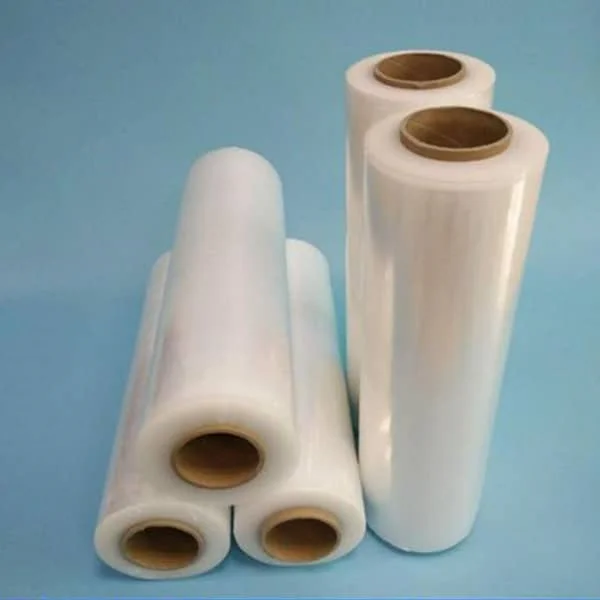
When buyers compare cast vs blown stretch film, the question is usually simple: which film is better for my pallets, my warehouse, and my shipping process? The answer depends on the type of load, wrapping method, transport conditions, and packaging budget.
Both cast stretch film and blown stretch film are widely used for pallet wrapping, logistics packaging, industrial product protection, warehouse storage, and export shipping. They may look similar from a distance, but their production processes and performance characteristics are different. Cast stretch film is often chosen for high clarity, quiet unwind, smooth application, and cost efficiency. Blown stretch film is often preferred for stronger puncture resistance, better load retention, and challenging or irregular loads.
This guide explains the key differences between cast and blown stretch film, where each one performs best, and how buyers can make a more practical purchasing decision.
What Is Cast Stretch Film?
Cast stretch film is produced through a cast extrusion process. In this process, melted resin is pushed through a flat die and cooled quickly on chill rollers. The rapid cooling process creates a film with excellent clarity, smooth surface quality, and consistent thickness.
Because the cast extrusion process is efficient and suitable for high-volume production, cast stretch film is commonly used in warehouses, distribution centers, retail logistics, food and beverage packaging, and general pallet wrapping operations.
One of the biggest advantages of cast stretch film is visibility. Clear cast stretch film allows workers to see product labels, shipping marks, barcodes, and pallet tags without removing the film. This is especially useful for inventory management, barcode scanning, quality checks, and warehouse picking.
Cast stretch film also unwinds quietly, which makes it more comfortable for operators in busy packaging areas. It usually has good cling, easy handling, and stable performance on both hand wrapping and machine wrapping applications.
What Is Blown Stretch Film?
Blown stretch film is produced through a blown film extrusion process. Melted resin is extruded through a circular die and blown upward into a bubble. The film cools more slowly, which gives it a different molecular structure and stronger resistance to puncture and tearing.
Blown stretch film is often selected for heavy-duty packaging, sharp-edged goods, irregular pallet loads, construction materials, timber, metal parts, industrial components, and products that may create more stress on the film during transportation.
Compared with cast film, blown film usually has a hazier appearance and a noisier unwind. However, its strength and load-holding ability make it valuable for demanding packaging environments.
For companies shipping heavy or unstable goods, the extra toughness of blown stretch film can help reduce the risk of film failure, pallet movement, and product damage during handling or transport.
Cast vs Blown Stretch Film: Main Differences
1. Clarity and Appearance
Cast stretch film has better clarity and a shinier appearance. This makes it ideal when product visibility is important. If warehouse staff need to scan barcodes, check labels, or identify products through the film, cast stretch film is usually the better choice.
Blown stretch film is generally less transparent. It may look hazier on the pallet, which can make label reading and scanning more difficult. However, for industrial goods where appearance is less important, this may not be a major issue.
2. Puncture Resistance
Blown stretch film usually performs better in puncture resistance. It is more suitable for loads with sharp corners, uneven surfaces, heavy cartons, metal parts, timber, or construction products.
Cast stretch film can still provide reliable protection for standard pallet loads, especially when the products are boxed, uniform, and stable. However, if the pallet has many sharp edges or irregular shapes, blown film may offer better security.
3. Load Retention
Load retention refers to the film’s ability to hold products tightly on the pallet after wrapping. Blown stretch film generally has stronger film memory and better holding force, making it effective for loads that may shift during long-distance transportation.
Cast stretch film stretches easily and is efficient for many standard applications, but it may continue to stretch slightly after application. For stable and uniform pallet loads, this is usually acceptable. For unstable or heavy loads, stronger containment may be needed.
4. Noise During Application
Cast stretch film is much quieter when unwound. This makes it popular in warehouses where workers wrap many pallets every day. A quieter film can improve the working environment and reduce operator fatigue.
Blown stretch film is usually louder during unwind. In high-volume manual wrapping environments, this may be less comfortable for workers.
5. Cost Efficiency
Cast stretch film is often more cost-effective because of its faster production process and high yield. For businesses wrapping large volumes of standard pallets, cast film can help control packaging costs while maintaining good performance.
Blown stretch film may cost more, but it can be more economical in difficult applications if it prevents product damage, rewrapping, film breaks, or pallet instability.
The lowest film price is not always the best choice. The real cost should include film usage per pallet, labor time, damage rate, rework, transportation conditions, and customer complaints.
6. Application Method
Both cast and blown stretch film can be used as hand stretch film or machine stretch film, depending on the roll specification and formulation.
For automatic pallet wrapping machines, cast machine stretch film is commonly used because of its smooth unwind, consistent thickness, and high clarity. For heavy-duty hand wrapping or difficult loads, blown hand stretch wrap may be preferred because of its toughness.
When Should You Choose Cast Stretch Film?
Cast stretch film is a strong choice for businesses that need clean appearance, product visibility, easy operation, and cost-efficient wrapping. It works well for:
Standard warehouse pallet wrapping
Boxed goods and uniform cartons
Retail and e-commerce distribution
Food and beverage logistics
Barcode scanning and label visibility
High-volume machine wrapping
Operations that require quiet unwind
Customers seeking lower cost per wrapped pallet
For many general packaging needs, cast stretch film offers the best balance between performance and economy.
When Should You Choose Blown Stretch Film?
Blown stretch film is better for more demanding applications where load security and puncture resistance are more important than clarity or noise level. It is suitable for:
Heavy pallets
Irregular loads
Sharp-edged products
Construction materials
Timber and building products
Metal components
Long-distance transportation
Loads exposed to stronger handling stress
Pallets that require stronger film memory and holding force
If your current film often breaks during wrapping, tears at corners, or fails during transportation, blown stretch film may be worth testing.
Quick Comparison Table
| Feature | Cast Stretch Film | Blown Stretch Film |
| Clarity | Excellent | Medium to low |
| Noise | Quiet unwind | Louder unwind |
| Puncture resistance | Good for standard loads | Stronger for difficult loads |
| Load retention | Good for stable pallets | Better for heavy or irregular pallets |
| Cost efficiency | Usually more economical | Usually higher cost |
| Appearance | Clear and glossy | Hazy or matte |
| Best use | Warehousing, logistics, retail, machine wrapping | Heavy-duty, sharp-edged, industrial packaging |
Customer Case: How Foshan JYE Packaging Materials Co., Ltd Supports Stretch Film Buyers
A logistics and warehousing customer needed to improve pallet packaging for mixed goods, including cartons, boxed consumer products, and heavier industrial items. The customer wanted one supplier that could support both standard pallet wrapping and more demanding packaging applications.
For standard warehouse pallets, visibility and smooth application were important. The customer needed film that allowed barcode scanning, label checking, and fast pallet identification. In this case, cast stretch film was recommended for its high clarity, quiet unwind, and stable performance on daily pallet wrapping tasks.
For heavier and more irregular loads, the customer required better puncture resistance and stronger load containment. Blown hand stretch wrap was considered for pallets with sharper corners and higher transport stress.
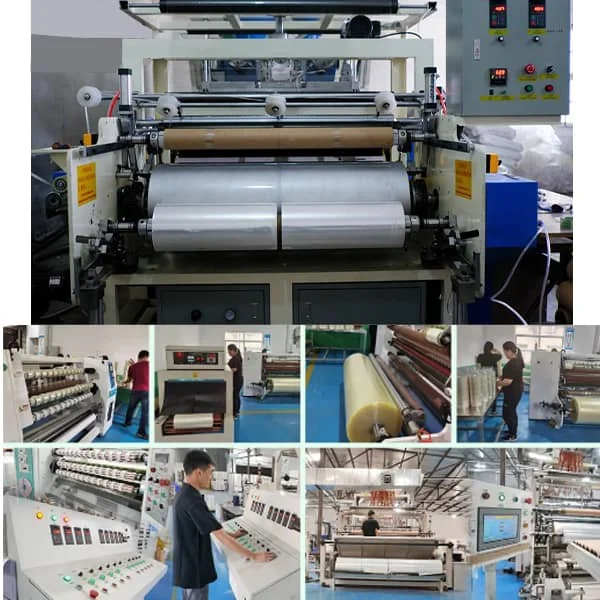
Foshan JYE Packaging Materials Co., Ltd was positioned as a practical supplier for this type of buyer because the company focuses on PE stretch film solutions, including hand stretch film, machine stretch film, pre-stretched film, pallet wrap, and customized packaging films. Public company information shows that JYE has over 10 years of experience in stretch film manufacturing, a factory area of approximately 10,000 square meters, more than 50 employees, two cast stretch film production lines, 24-hour continuous production capability, export coverage to more than 50 countries, long-term cooperation with over 200 clients, and monthly output of up to 500 tons.
For buyers, this type of production capacity matters because stretch film is a high-frequency consumable. Warehouses and distributors need stable supply, consistent roll specifications, and quick response for repeat orders. A supplier with continuous production and export experience can help customers reduce purchasing risk and maintain packaging continuity.
In this case, the customer’s purchasing strategy was not simply to choose cast film or blown film. Instead, the better solution was to match the film type to the load type. Cast stretch film was used for clear, quiet, and cost-efficient wrapping of standard pallets. Blown stretch film was reserved for heavier or more difficult loads where puncture resistance and load stability were more important.
This approach helped the customer avoid overusing heavy-duty film on simple pallets while still protecting higher-risk shipments with stronger film. For many B2B buyers, this is the most practical way to control packaging cost without sacrificing load security.
How to Choose Between Cast and Blown Stretch Film
Before placing an order, buyers should review several key factors:
First, check the load type. If your pallets are uniform and stable, cast stretch film may be enough. If your pallets are heavy, irregular, or sharp-edged, blown stretch film may be safer.
Second, consider the wrapping method. Machine wrapping often benefits from cast film because of its consistent thickness, smooth unwind, and high clarity. Manual wrapping for difficult loads may benefit from blown film.
Third, evaluate transportation conditions. Local warehouse storage may not require the same film strength as long-distance export shipping. Pallets exposed to repeated handling, vibration, or rough transport may need stronger film.
Fourth, calculate the real packaging cost. A cheaper film may become more expensive if workers use too many layers, if the film breaks often, or if products are damaged during shipping.
Finally, request samples and test them on your actual pallets. The best stretch film decision should be based on real wrapping performance, not only on product descriptions.
FAQ: Cast vs Blown Stretch Film
Is cast stretch film better than blown stretch film?
Not always. Cast stretch film is better for clarity, quiet unwind, and cost-efficient standard packaging. Blown stretch film is better for puncture resistance, heavy loads, and irregular pallets.
Which stretch film is better for machine wrapping?
Cast machine stretch film is commonly used for automatic pallet wrapping because it offers smooth unwind, consistent thickness, good clarity, and efficient performance.
Which stretch film is stronger?
Blown stretch film is generally stronger in puncture resistance and load retention, making it suitable for demanding industrial applications.
Which stretch film is cheaper?
Cast stretch film is usually more cost-effective for general pallet wrapping because the production process is efficient and the film performs well for standard loads.
Can I use both cast and blown stretch film?
Yes. Many businesses use cast stretch film for standard pallets and blown stretch film for heavy, irregular, or sharp-edged loads. This can be a smart way to balance cost and performance.
Final Thoughts
The choice between cast vs blown stretch film should be based on your load type, wrapping process, transport conditions, and budget. Cast stretch film is ideal for clear, quiet, and economical wrapping of standard pallets. Blown stretch film is better for heavy-duty applications where puncture resistance and load retention are critical.
For most warehouses, the best solution is not choosing one film for every pallet. A more efficient approach is to use cast film for regular packaging and blown film for higher-risk loads.
If you are looking for hand stretch film, machine stretch film, pallet stretch film, or customized wrapping solutions, Foshan JYE Packaging Materials Co., Ltd can help match the right film to your packaging needs and support stable supply for industrial, logistics, and warehouse customers.