

How to Choose the Best Stretch Film for Pallets: Machine, Hand & Pre-Stretch Comparison Guide
-
How to select pallet stretch film gauge
-
Cast vs blown stretch film for pallet load stability
-
Hand stretch film vs machine stretch film cost comparison
-
Heavy-duty pallet wrapping film supplier
Introduction
Securing goods for transit is one of the most critical steps in modern supply chain management. Choosing the best stretch film for pallets not only prevents costly product damage during shipping, but it also reduces material consumption, speeds up packing operations, and lowers overall freight expenditures.
With various film types, thicknesses, and extrusion processes available on the market, finding the right match for your warehousing needs can be challenging. In this comprehensive guide, we break down the key factors to consider when selecting pallet stretch wrap and how to choose the ideal film for your specific load requirements.
1. Match the Film Type to Your Application Method
The first step in choosing the right stretch film is determining how your pallets are wrapped in your warehouse.
A. Hand Stretch Film (For Low-to-Medium Volume Wrapping)
If your operations wrap fewer than 15–20 pallets per day, hand stretch wrap is typically the most flexible and economical solution.
-
Key Advantage: Requires zero machinery investment and allows operators to pack goods anywhere in the warehouse.
-
Best Used For: Irregularly shaped loads, lower-volume packaging lines, or decentralized warehouse stations.
B. Machine Stretch Film (For High-Volume Automated Lines)
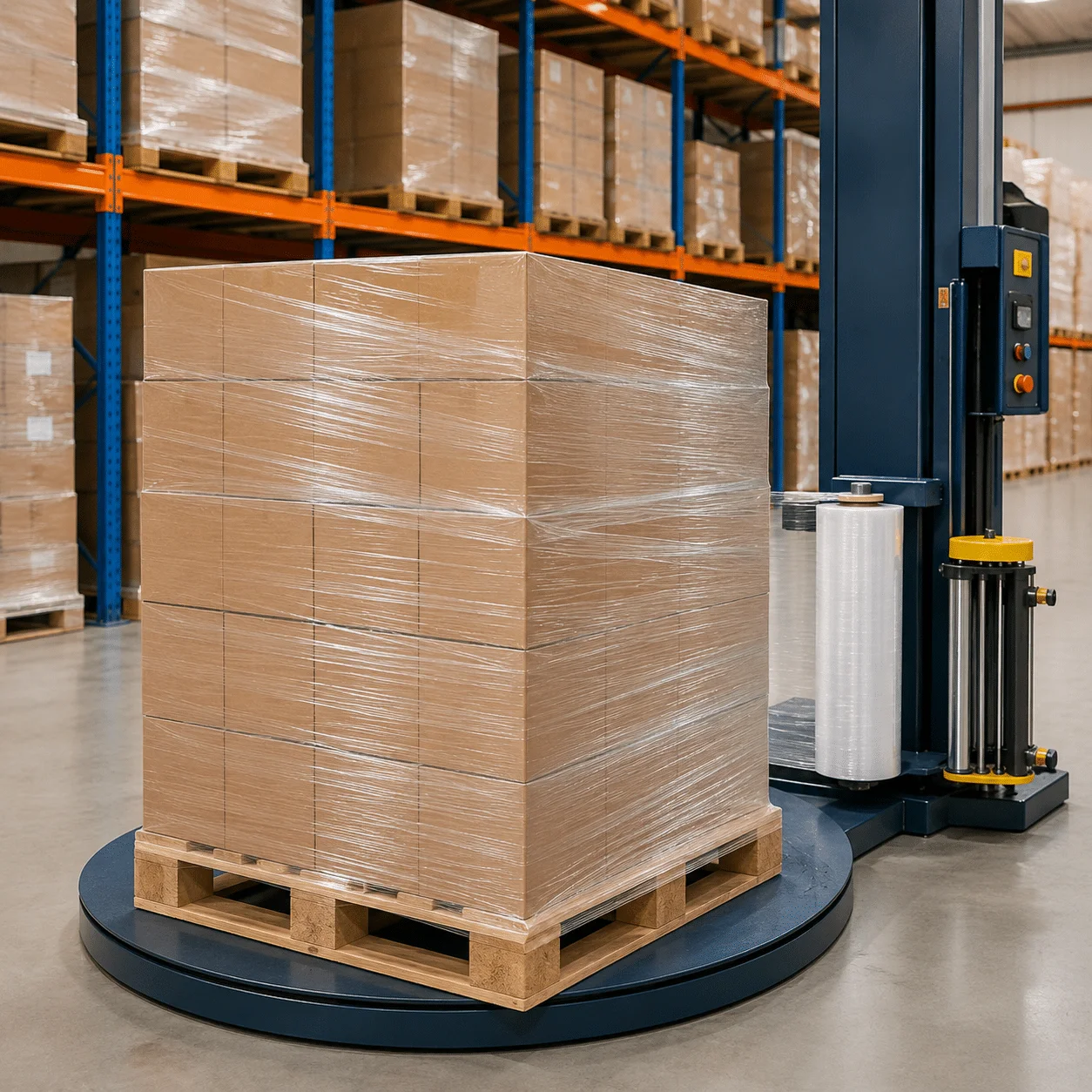
For facilities wrapping over 20–30 pallets per hour, automated or semi-automated stretch wrapping machines are necessary.
-
Key Advantage: High pre-stretch capabilities (often up to 250%–300%+), which significantly reduces the amount of plastic used per load.
-
Best Used For: Standardized production lines, high-density warehousing, and high-throughput distribution centers.
2. Cast Film vs. Blown Film: Which Extrusion Process Do You Need?
Understanding the manufacturing process helps determine how the film will perform under tension and harsh environmental conditions.
| Feature | Cast Stretch Film | Blown Stretch Film |
| Clarity | Crystal clear (easy barcode scanning) | Hazy / Opaque |
| Noise Level | Ultra-quiet unwind | Noisy application |
| Puncture Resistance | Moderate | Exceptional (High force-to-load) |
| Cling Level | Smooth, quiet cling | Superior cling on both sides |
| Ideal Application | Standard box loads, high-speed wrapping | Heavy-duty, sharp edges, cold storage |
-
Choose Cast Film if clear barcode scan-ability, quiet warehouse operation, and consistent gauge consistency are your main priorities.
-
Choose Blown Film if you are transporting heavy industrial goods, sharp-edged machinery, or loads with uneven protrusions that require maximum tear resistance.
3. How to Select the Right Thickness (Gauge)
Selecting the correct gauge ensures your pallet load stays intact without wasting extra material.
-
12–15 Micron (47–60 Gauge): Ideal for light-to-medium uniform loads (e.g., lightweight corrugated boxes, paper goods).
-
17–20 Micron (70–80 Gauge): The industry standard for general warehousing, medium-weight pallets, and standard freight shipping.
-
23+ Micron (90+ Gauge): Heavy-duty protection for high-density, sharp, or unstable loads such as bagged cement, bricks, and heavy automotive parts.
Pro Tip – Consider Pre-Stretch Film: Pre-stretched films are pre-elongated during manufacturing. They require far less physical effort from manual operators, prevent film necking, and offer uniform load retention at a thinner gauge.
4. Key Questions to Ask Before Placing Your Order
Before finalizing your purchase with a manufacturer or distributor, evaluate these core parameters:
-
What is the total weight and stability of the load? High or top-heavy loads require higher containment force.
-
Will the pallets be exposed to extreme temperatures? Cold-storage facilities require specialized cling formulations.
-
Do you require additional functional properties? UV-inhibitor film for outdoor storage, anti-static film for electronics, or opaque film for high-value theft prevention.
Conclusion & Next Steps
Finding the best stretch film for pallets comes down to balancing film type, gauge, and application method with your specific load profile. By upgrading to the correct film grade, B2B buyers frequently cut material consumption by 15% to 30% while improving overall load containment.
Looking to optimize your pallet wrapping operations? Explore our comprehensive line of high-performance hand and machine stretch films, or contact our engineering team today for custom quotes, specifications, and sample testing!