

How Much Stretch Film Is Needed per Pallet?
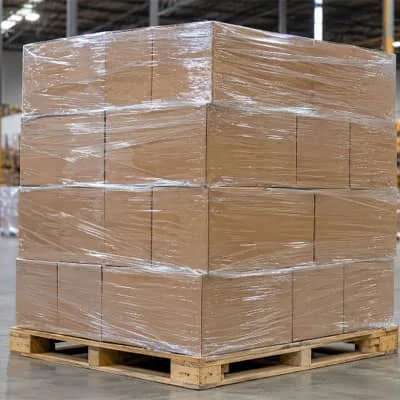
One of the most common questions warehouse managers, distributors, and logistics companies ask is:
How much stretch film does one pallet actually require?
The answer isn’t simply “one roll” or “a few wraps.”
Film consumption depends on several variables, including pallet size, load height, wrapping pattern, film thickness, and stretch ratio. Choosing the wrong film can significantly increase packaging costs or reduce load stability during transport.
In this guide, we’ll explain how to calculate stretch film usage per pallet and show how selecting the right film can lower packaging costs without compromising load security.
Why Does Stretch Film Consumption Matter?
Stretch film is often viewed as a low-cost packaging material, but over thousands of pallets, even a small reduction in film usage can generate substantial savings.
For example:
Lower material consumption
Faster wrapping speed
Reduced plastic waste
Better pallet stability
Lower transportation losses
Using high-performance film also reduces the number of wraps required while maintaining the same holding force.
Factors That Affect Stretch Film Usage
Several variables determine how much stretch film is required.
1. Pallet Dimensions
Typical pallet sizes include:
| Pallet Size | Common Region |
| 1200 × 1000 mm | Europe |
| 1200 × 800 mm | Euro Pallet |
| 48″ × 40″ | North America |
Larger pallets naturally require more film.
2. Pallet Height
Higher loads require more vertical wraps.
Example:
800 mm pallet
1200 mm pallet
1800 mm pallet
The taller the pallet, the more film is consumed.
3. Number of Wraps
A standard wrapping cycle generally includes:
Bottom reinforcement
Middle wrapping
Top reinforcement
Heavy products usually require additional revolutions.
4. Stretch Ratio
Higher stretch ratios mean more pallet coverage with less film.
According to JYE machine stretch film specifications, machine-grade stretch film provides 300–500% elongation, allowing significantly more coverage from each roll when used correctly.
Typical Stretch Film Consumption Per Pallet
The following values represent common industrial estimates.
| Load Type | Film Thickness | Estimated Film Consumption |
| Light load | 12–15 μm | 120–170 g |
| Medium load | 17–20 μm | 170–250 g |
| Heavy load | 23–30 μm | 250–450 g |
Actual consumption depends on wrapping settings and load stability requirements.
JYE Packaging Example
Example Load
Pallet Size: 1200 × 1000 mm
Height: 1500 mm
Weight: 650 kg
Machine Wrapping
Recommended product:
Using JYE’s machine stretch film with optimized pre-stretch settings allows consistent load containment while reducing unnecessary film usage.
JYE Product Specifications
JYE manufactures stretch film using premium LLDPE materials for industrial pallet wrapping.
Typical specifications include:
| Property | Specification |
| Material | LLDPE |
| Thickness | 7–50 μm |
| Width | 30–2000 mm |
| Elongation | 300–500% |
| Tensile Resistance | 10 kg/25 mm |
| Core Size | 1″, 1.5″, 2″, 3″ |
| Color | Transparent, Black, Colored |
Internal Link
Machine Stretch Film Product Page
JYE Packaging Laboratory Test
Replace the following values with actual JYE laboratory test data before publication.
Test Conditions
Standard pallet
Carton load
Ambient temperature
Automatic stretch wrapper
| Film | Thickness | Load Weight | Film Used |
| Film A | 15 μm | 300 kg | 500 g |
| Film B | 17 μm | 600 kg | 800 g |
| Film C | 20 μm | 900 kg | 1500 g |
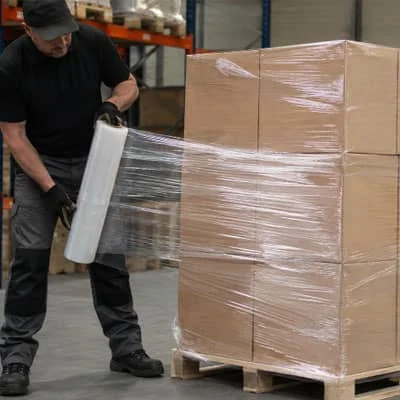
Automatic pallet wrapping test in JYE Packaging Laboratory
Case Study
Reducing Film Consumption by Switching to JYE Machine Stretch Film
A logistics customer previously used standard 20 μm machine film for export pallets.
After switching to JYE machine stretch film:
Film consumption reduced by 30%
Packaging cost reduced by 30%
Load stability maintained during export shipment
No pallet failures recorded
Insert:
Before & After pallet photos
Stretch test photos
Customer warehouse images
Tips to Reduce Stretch Film Usage
Use the Correct Film Thickness
Using thicker film than necessary increases packaging costs.
Optimize Wrap Pattern
Extra wraps often provide little additional stability.
Use Machine Stretch Film
Machine-applied film provides:
Better consistency
Higher stretch efficiency
Lower film waste
Product Link:
Machine Stretch Film
Choose High-Performance LLDPE Film
Premium resin improves:
Puncture resistance
Tear resistance
Load holding force
JYE manufactures stretch films using high-quality LLDPE materials designed for industrial pallet wrapping.
Recommended JYE Products
For different packaging requirements, JYE offers:
Pre-Stretched Film
Blown Stretch Film
Each product is available in multiple thicknesses, widths, colors, and customized specifications.
Frequently Asked Questions
How many wraps should a pallet have?
Most standard pallets require 18–30 revolutions depending on weight and transport conditions.
How much stretch film is used for one pallet?
Typical usage ranges from 120 g to 450 g depending on pallet dimensions and wrapping settings.
Can thinner film reduce costs?
Yes. High-performance stretch film with higher elongation can often replace thicker conventional film while maintaining load stability.
Should I choose hand or machine stretch film?
Hand stretch film is suitable for low-volume operations.
Machine stretch film is recommended for warehouses with high daily pallet throughput.
Finally
The amount of stretch film required per pallet depends on pallet dimensions, load weight, wrapping pattern, and film performance—not simply roll length or thickness.
By selecting the appropriate stretch film and optimizing wrapping parameters, companies can significantly reduce material consumption while maintaining secure transportation.
JYE provides a complete range of industrial stretch film solutions, including machine stretch film, hand stretch film, pre-stretched film, and customized packaging films. With advanced production equipment, strict quality control, and an in-house R&D laboratory, JYE helps customers improve packaging efficiency and reduce total packaging costs.