
How to Stretch Wrap a Pallet: buyer Guide
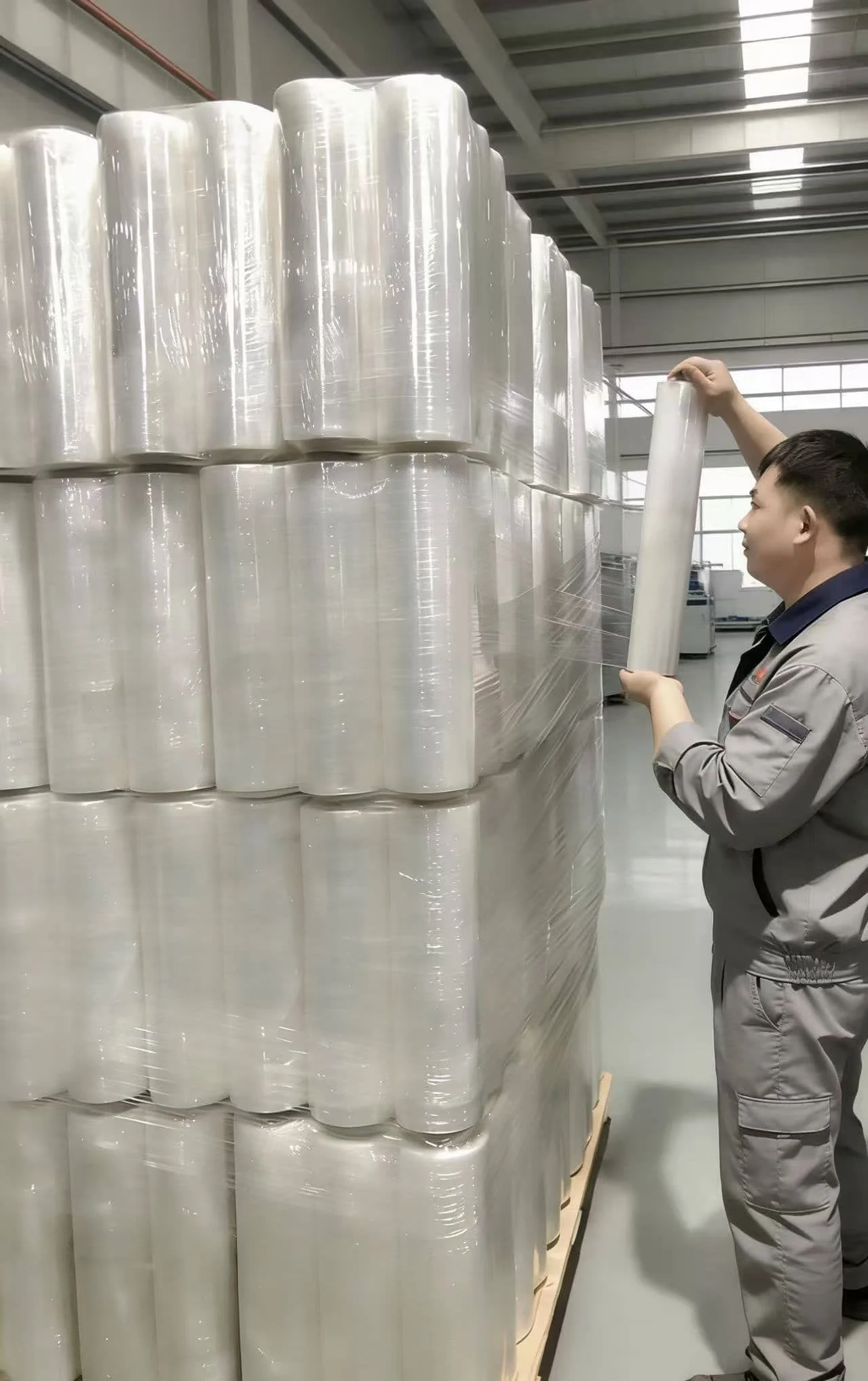
Knowing how to stretch wrap a pallet correctly is essential for protecting products during warehouse storage, loading, handling, and transportation. A properly wrapped pallet helps keep cartons together, limits unwanted movement, protects goods from dust and light moisture, and reduces the risk of load failure.
However, effective pallet wrapping requires more than simply circling a load with plastic film. The stretch film must be selected according to the pallet weight, load shape, wrapping method, transport conditions, and required holding force.
This guide explains how to stretch wrap a pallet by hand, how to select the appropriate pallet stretch film, and how to avoid common wrapping mistakes.
What Is Pallet Stretch Wrapping?
Pallet stretch wrapping is the process of applying elastic plastic film around products stacked on a pallet. The film stretches during application and then attempts to recover, creating holding force around the load.
Stretch wrap is commonly used for:
- Cartons and boxed products
- Bottled beverages
- Food and consumer goods
- Furniture and household products
- Electronic equipment
- Plastic and metal components
- Building materials
- Export shipments
- Warehouse inventory
Stretch film should not be treated only as an outer protective covering. Its main function is to contain the load and connect the products securely to the pallet.
What You Need to Stretch Wrap a Pallet
Before beginning, prepare the following materials and equipment:
- A stable pallet in good condition
- Properly stacked products
- Hand stretch film or machine stretch film
- A manual stretch film dispenser, if available
- Corner protectors for sharp or irregular loads
- Top sheets when additional dust or moisture protection is required
- Suitable workplace personal protective equipment
Do not attempt to stabilize a damaged pallet only by adding more stretch film. Broken boards, exposed nails, weak cartons, leaking containers, or severely unstable products should be corrected before wrapping begins.
How to Choose the Right Stretch Film
The correct stretch film depends on the load weight, pallet shape, application method, and transport risk.
Hand Stretch Film
Hand stretch film is applied manually, either directly from the roll or with a handheld dispenser. It is suitable for:
- Low-to-medium packaging volumes
- Warehouses without pallet wrapping machines
- Irregular pallet sizes
- Temporary packing stations
- Repacking and maintenance operations
- Small production facilities
A practical manual wrapping configuration is:
| Product | Thickness | Width | Length | Application |
| Hand Stretch Film for Manual Pallet Wrapping | 80 gauge | 500 mm | 1000 ft | Standard manual pallet wrapping |
An 80-gauge hand stretch film is generally suitable for many regular, medium-duty pallet loads. Heavy products, sharp corners, unstable cartons, or long-distance export shipments may require a thicker or higher-performance film.
High-Strength Stretch Film
For heavier or more demanding loads, high-strength stretch film provides increased puncture resistance, elongation, and load containment.
Available product configurations may include:
| Specification | Available Options |
| Material | LLDPE |
| Application | Hand wrapping or machine wrapping |
| Thickness | 10–30 μm |
| Width | 300 mm, 450 mm or 500 mm |
| Roll length | Approximately 200–8600 m |
| Core | 2-inch, 3-inch, 50 mm or 76 mm |
| Film weight | Approximately 2–60 kg |
| Elongation | Approximately 340–500% |
| Core material | Paper core or plastic core |
Buyers should confirm whether each specification is intended for hand, machine, or jumbo-roll use before ordering.
Machine Stretch Film
Machine stretch film is designed for semi-automatic or automatic pallet wrapping equipment. It is more appropriate when a company needs:
- Higher wrapping speed
- Repeatable film tension
- Consistent overlap
- Reduced operator fatigue
- Better film consumption control
- High daily pallet volumes
The film must be compatible with the wrapping machine’s carriage system and pre-stretch capability.
How to Stretch Wrap a Pallet by Hand
Follow these steps to create a stable and professional pallet load.
Step 1: Inspect the Pallet
Check that the pallet is clean, dry, and structurally sound.
Look for:
- Broken or loose boards
- Exposed nails
- Sharp edges
- Significant deformation
- Moisture damage
- Debris beneath the pallet
A damaged pallet can puncture the film or fail during forklift handling, regardless of how tightly it is wrapped.
Step 2: Stack the Products Correctly
Place heavier products at the bottom and lighter products at the top. Keep the load centered on the pallet and avoid large gaps between cartons.
Whenever possible:
- Align cartons close to the pallet perimeter
- Keep the pallet footprint rectangular
- Avoid excessive product overhang
- Use interlocking layers when the cartons permit it
- Keep the top of the load reasonably level
Product overhang increases the risk of carton damage and film puncture. A pallet that is unstable before wrapping will usually remain unstable after wrapping.
Step 3: Secure the Film to the Pallet Base
Pull out a short film tail and attach it to the lower part of the pallet.
Common attachment methods include:
- Threading the film through a pallet opening
- Tucking the film around a pallet corner
- Twisting the film into a rope and securing it to the pallet base
Avoid tying complicated knots that are difficult to remove. The objective is to create a secure starting point that connects the film to the pallet.
Step 4: Wrap the Bottom of the Pallet
Walk around the pallet while maintaining steady film tension. Apply several complete revolutions around the pallet base.
The lower wraps are important because they connect the products to the pallet rather than merely wrapping the cartons together.
As an initial operating point, many manual wrapping procedures use approximately three to five base revolutions. The final number should be determined through load testing and adjusted according to pallet weight, film performance, and transport conditions.
Keep part of the film below the bottom layer of products so the load is anchored to the pallet.
Step 5: Spiral Upward with Consistent Overlap
After securing the base, begin moving the film upward.
Overlap each new film layer by approximately 30–50%. Consistent overlap prevents weak gaps and distributes holding force more evenly across the pallet.
During wrapping:
- Maintain steady tension
- Keep the film roll close to the load
- Walk forward rather than twisting your upper body excessively
- Avoid sudden pulling movements
- Inspect the film for tears or punctures
The film should be stretched enough to create holding force, but not so aggressively that it repeatedly breaks or damages the cartons.
Step 6: Reinforce Corners and Unstable Areas
Pallet corners experience concentrated stress. Add extra film around areas with:
- Sharp carton corners
- Irregular products
- Loose upper layers
- Heavy containers
- Bags or flexible packages
- Uneven load profiles
Use corner boards or edge protectors when the product shape could puncture the film. Corner protectors can also help distribute compression and prevent cartons from being crushed.
Step 7: Secure the Top of the Load
When the film reaches the top, apply additional revolutions around the upper section.
For tall or top-heavy pallets, create a reinforced band around the upper part of the load. This helps limit side-to-side movement.
A top sheet may be added before the final upper wraps when additional protection from dust or light moisture is required. The top sheet should be held in place by the surrounding stretch film.
Do not cover ventilation openings when the products require airflow.
Step 8: Spiral Back Down
After securing the top, wrap downward toward the pallet base.
The second spiral creates additional containment and reinforces the overlap pattern. Apply extra film to any areas that appear loose or vulnerable.
Heavy, irregular, or export pallets may require additional reinforcement bands around the middle and lower sections.
Step 9: Finish and Secure the Film Tail
Complete the wrapping cycle at the pallet base.
Cut or tear the film carefully and press the remaining tail firmly against the wrapped surface. The film’s cling should hold the tail in position.
Do not leave a long, loose tail. Loose film can catch on handling equipment, warehouse racks, or adjacent pallets.
Step 10: Inspect the Finished Pallet
Before moving the pallet, inspect the complete load.
Confirm that:
- The products are connected to the pallet
- The base has sufficient reinforcement
- Film overlap is consistent
- The upper layers cannot move freely
- There are no major film tears
- Sharp corners are protected
- Labels remain visible when required
- The film tail is secure
- Forklift entry points are not obstructed
Apply gentle manual pressure to the upper cartons. Significant movement may indicate insufficient containment, poor stacking, inadequate film tension, or an unsuitable film grade.
How Much Stretch Wrap Should Be Used?
There is no universal number of film layers suitable for every pallet.
Film consumption depends on:
- Total load weight
- Pallet dimensions
- Load height
- Carton strength
- Product geometry
- Film thickness
- Film elongation
- Applied tension
- Shipping distance
- Handling frequency
- Road, sea, rail, or air transport conditions
Using too little film can lead to load movement and product damage. Using excessive film increases material cost, labor time, and packaging waste without necessarily improving load stability.
The correct film quantity should be established through controlled wrapping trials and transport testing.
Common Pallet Wrapping Mistakes
Wrapping Only the Products
If the film does not connect the products to the pallet, the entire wrapped load may slide away from the pallet during handling.
Always anchor the lower film layers to the pallet base.
Using Insufficient Film Tension
Loose film provides limited containment. The film should remain under controlled tension throughout the wrapping process.
Overstretching the Film
Excessive manual tension can cause frequent film breaks, damaged cartons, reduced film width, and inconsistent holding force.
Inconsistent Overlap
Large gaps between film layers create weak areas. Maintain a consistent overlap as the film moves upward and downward.
Ignoring Sharp Corners
Sharp products can puncture the film during wrapping or transport. Use additional film, edge protection, or a more puncture-resistant grade.
Selecting Film Only by Price
A low-cost roll may provide less usable film, inconsistent thickness, weak cling, or inadequate puncture resistance. Film should be evaluated according to cost per securely wrapped pallet rather than price per roll alone.
Applying the Same Pattern to Every Load
A uniform load of lightweight cartons does not require the same wrapping program as machinery parts, tiles, drums, or irregular building materials.
The wrapping pattern should reflect the actual load.
Hand Wrapping vs. Machine Wrapping
| Factor | Hand Wrapping | Machine Wrapping |
| Packaging volume | Low to medium | Medium to high |
| Initial investment | Low | Higher |
| Wrapping consistency | Operator-dependent | More consistent |
| Film tension | Manually controlled | Machine-controlled |
| Labor requirement | Higher | Lower per pallet |
| Irregular loads | Flexible | Depends on machine setup |
| Film efficiency | Variable | Usually easier to control |
Hand film is appropriate for flexible or lower-volume operations. Machine stretch film is more suitable when speed, repeatability, and film control are priorities.
Selecting a Pallet Stretch Film Supplier
A qualified supplier should be able to confirm:
- Film material
- Net film weight
- Core weight
- Film thickness tolerance
- Roll width and length
- Core diameter
- Stretch performance
- Puncture resistance
- Cling configuration
- Carton packing quantity
- Pallet loading quantity
- Private-label options
- Hand or machine compatibility
For businesses sourcing customizable LLDPE pallet wrapping materials, Foshan JYE Packaging Materials Co., Ltd. provides hand stretch film, machine stretch film, pallet stretch film, jumbo rolls, and industrial wrapping film for warehouse, logistics, manufacturing, and export packaging applications.
Before placing a bulk order, provide the supplier with the pallet dimensions, load weight, product type, wrapping method, expected monthly consumption, destination country, and transport conditions.
Frequently Asked Questions
What is the correct way to stretch wrap a pallet?
Start by securing the film to the pallet base. Apply several base wraps, spiral upward with consistent overlap and tension, reinforce the top and corners, spiral downward, and finish with additional base wraps.
Should stretch wrap be attached to the pallet?
Yes. The film should connect the products to the pallet. Wrapping only around the cartons may hold the cartons together but may not prevent the complete load from sliding off the pallet.
How much should stretch wrap overlap?
An overlap of approximately 30–50% is a practical starting range for many pallet loads. The correct overlap should be adjusted according to the film, load weight, wrapping tension, and transport risk.
How many times should the bottom of a pallet be wrapped?
Three to five revolutions are commonly used as an initial setup, but heavier or unstable pallets may require additional reinforcement. The wrapping program should be validated by load testing.
Is 80-gauge stretch wrap suitable for pallets?
An 80-gauge hand stretch film is suitable for many standard medium-duty pallet loads. Heavy, sharp-edged, irregular, or high-risk export loads may require thicker or higher-performance stretch film.
Can hand stretch film be used with a wrapping machine?
Hand stretch film is not normally designed for automatic pallet wrapping equipment. Machine stretch film should be selected according to the machine type, roll dimensions, carriage design, and pre-stretch system.
What causes stretch film to break during wrapping?
Common causes include excessive tension, sharp corners, damaged rolls, unsuitable film thickness, incorrect machine settings, poor storage conditions, and inconsistent film quality.
How to stretch wrap a pallet correctly can improve load stability, reduce product movement, limit packaging damage, and make warehouse handling more efficient.
The essential principles are straightforward: begin with a stable pallet, stack the products correctly, choose an appropriate film, anchor the load to the pallet, maintain consistent tension and overlap, reinforce vulnerable areas, and inspect the finished pallet before shipment.
The most effective wrapping method should always be validated under actual warehouse and transportation conditions. Selecting the correct stretch film specification is just as important as applying the correct wrapping technique
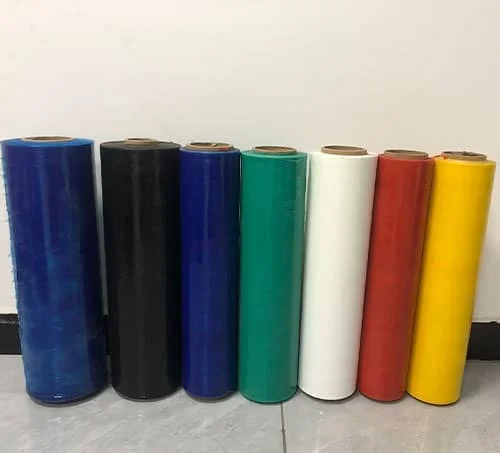
Foshan JYE Packaging Materials Co., Ltd is one of the Professional Manufacturer of Stretch Film in China, Offer Customized Solutions for All Packaging Needs.