

How to Use Stretch Film: A Step-by-Step Pallet Wrapping Guide
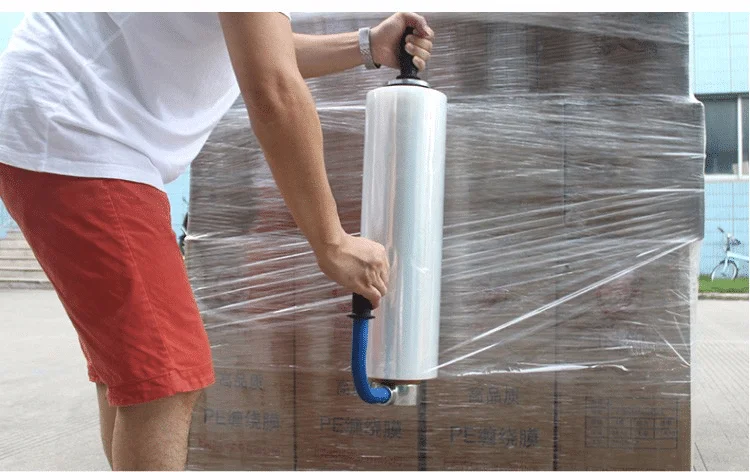
Knowing how to use stretch film correctly can prevent pallet loads from shifting, reduce product damage and help control packaging costs.
The basic method is straightforward: build a stable pallet, anchor the film at the base, wrap the bottom several times, move upward with consistent tension and approximately 50% overlap, reinforce the top, and finish by securing the film tail.
However, good pallet wrapping is not simply about applying more film. The film type, thickness, tension, overlap and number of rotations must match the weight, shape and transportation conditions of the load.
This guide explains how to wrap a pallet with stretch film by hand, how to adjust the process for machine wrapping, which mistakes to avoid and what information buyers should provide when requesting a quotation.
Quick Answer: How Do You Use Stretch Film?
To use stretch film for pallet wrapping:
- Inspect the pallet and stack the load securely.
- Select the correct film type and thickness.
- Anchor the film to the bottom of the pallet.
- Apply three to five wraps around the base.
- Move upward while overlapping each layer by about 50%.
- Reinforce the top and any unstable sections.
- Cut the film, secure the tail and inspect the finished pallet.
Use steady tension throughout the process. The film should hold the products together without crushing cartons or tearing around sharp edges.
What Is Stretch Film Used For?
Stretch film, also called stretch wrap or pallet wrap, is an elastic packaging film commonly made from linear low-density polyethylene, or LLDPE.
When stretched around a pallet load, the film attempts to return to its original shape. This recovery creates containment force that helps hold cartons, bags or other products together.
A suitable stretch film can help:
- Reduce movement between cartons
- Improve pallet load stability
- Protect products from dust and light moisture
- Reduce scratches during handling
- Keep loose products together
- Conceal pallet contents when colored or opaque film is used
- Improve warehouse and shipping efficiency
Stretch film should not be expected to repair a badly stacked pallet. It also may not be sufficient as the only restraint for extremely heavy, unstable or hazardous loads. Such loads may require corner boards, anti-slip sheets, strapping or other engineered load-securing methods.
Before Wrapping: Choose the Right Stretch Film
Selecting the correct film is the first step in learning how to use stretch wrap effectively.
Hand Stretch Film
Hand stretch film is applied manually, either directly from the roll or with a handheld dispenser.
It is generally suitable for:
- Warehouses wrapping a limited number of pallets
- Mixed pallet sizes
- Small production facilities
- Irregular loads that require manual attention
- Repairing or reinforcing an existing pallet wrap
JYE lists hand-film thicknesses of approximately 15–25 microns, depending on the product and application.
Machine Stretch Film
Machine stretch film is designed for turntable, rotary-arm or other automatic and semi-automatic stretch wrappers.
It is normally more appropriate when a company requires:
- Consistent film tension
- Repeatable wrapping patterns
- Higher pallet throughput
- Lower operator involvement
- Better control of film consumption
- High pre-stretch performance
JYE lists machine-film thicknesses of approximately 20–50 microns and machine-film stretch rates of 300%–400% for applicable products. Actual settings must be matched to the film, machine and pallet load.
Do not assume that a hand-film roll can be used safely or efficiently on a wrapping machine. Machine film must be compatible with the wrapper’s carriage, tension system and pre-stretch settings.
How to Select Stretch Film Thickness
Thickness alone does not determine film performance. Resin formulation, extrusion quality, layer construction, puncture resistance, cling and stretch recovery are also important.
As an initial selection guide, JYE recommends:
| Load condition | Starting thickness range |
| Light and uniform cargo | 17–20 microns |
| General pallet shipping | 20–25 microns |
| Heavy, sharp or irregular cargo | 25–50 microns |
These ranges are starting points rather than universal rules.
A heavy but smooth pallet may perform well with a high-performance thin film, while a lighter pallet with sharp corners may require greater puncture resistance. Buyers should test the film on their actual products before confirming a large order.
For difficult loads, read the detailed guide on how to choose stretch film for heavy pallet loads.
What You Need Before Wrapping a Pallet
Prepare the following items:
- A stable, undamaged pallet
- The correct stretch film roll
- A hand-film dispenser, when available
- Protective gloves
- Safety cutter
- Corner boards for crush-sensitive cartons
- Anti-slip sheets when layers slide easily
- Top sheet when additional dust or moisture protection is required
- Strapping for loads that need additional vertical restraint
Avoid cutting stretch film with an exposed knife blade near products. A guarded safety cutter reduces the risk of personal injury and accidental product damage.
How to Wrap a Pallet with Stretch Film
Step 1: Inspect the Pallet and Build a Stable Load
Begin with an undamaged pallet that is appropriate for the product weight.
Place heavier cartons on the bottom and lighter cartons on top. Keep the load as square and compact as possible, with minimal gaps between products.
Avoid excessive pallet overhang. Cartons that extend beyond the pallet edge are more likely to be crushed, puncture the film or become damaged during forklift handling.
Before wrapping, check that:
- The pallet deck and blocks are not broken
- Products are distributed evenly
- Cartons are not leaning
- Sharp edges are covered
- Loose labels or packaging materials have been removed
- The load does not exceed the pallet’s capacity
Stretch film stabilizes a well-built load. It cannot fully correct poor stacking.
Step 2: Position the Stretch Film Correctly
Determine which side of the film provides cling and position the roll so the cling side faces the previous film layer.
When using hand film, hold the roll so it can unwind smoothly as you walk forward around the pallet. A dispenser can improve control and reduce friction on the operator’s hands.
Maintain a safe posture. Walk around the pallet instead of twisting repeatedly from the waist.
Step 3: Anchor the Film at the Pallet Base
Pull approximately one arm’s length of film from the roll.
Twist the loose end into a narrow rope and secure it around a bottom pallet corner, pallet block or the lowest stable section of the load. Do not attach the film to a fragile carton corner that may tear.
The anchor prevents the film from sliding upward during the first rotations.
When possible, allow the initial wrap to capture both the pallet and the bottom layer of products. This helps connect the load to the pallet rather than simply wrapping the cartons together.
Step 4: Wrap the Base Three to Five Times
Apply three to five complete rotations around the bottom of the pallet.
The base is one of the most important parts of the wrapping pattern because pallet movement often begins at the connection between the products and the pallet.
Keep the film under steady tension. Each rotation should be firm enough to remove loose film but not so tight that the bottom cartons collapse.
Use additional base wraps when the load is:
- Heavy
- Tall
- Uneven
- Transported over long distances
- Frequently handled by forklifts
- Made from bags or slippery cartons
Step 5: Move Upward with Approximately 50% Overlap
After securing the base, move upward in a controlled spiral.
Each new pass should cover approximately half of the previous film layer. This 50% overlap creates a continuous wrap and reduces weak horizontal gaps.
Maintain consistent tension during every rotation. Sudden changes in tension can create loose sections, crushed carton corners or film breaks.
When you encounter an irregular area:
- Slow down.
- Reinforce the weak section.
- Use corner boards over sharp edges.
- Add an extra rotation if necessary.
- Do not simply pull harder on the film.
For very unstable loads, use a roping technique only when appropriate. Roping involves twisting a section of film into a narrow band to concentrate holding force. It should not replace full-width wrapping across the entire pallet.
Step 6: Reinforce the Top of the Load
When the film reaches the top, apply two to four additional rotations around the upper layers.
Angle the film slightly downward when moving around the top section. This can help apply downward containment force and reduce movement in the upper cartons.
A pallet top sheet may be placed over the load before the final top wraps when additional dust or light moisture protection is needed.
Do not cover ventilation openings on products that require airflow unless a suitable pallet stretch film and wrapping pattern have been approved for that application.
After reinforcing the top, spiral downward again if the load requires greater containment or protection.
Step 7: Cut, Secure and Inspect the Film
Cut the stretch film with a safety cutter.
Press the loose tail firmly against the previous film layer so that it clings. If necessary, tuck the tail beneath an existing layer.
Do not leave a long loose tail. It can catch on forklift equipment, racks or adjacent pallets and cause the wrap to unravel.
Walk around the finished pallet and check for:
- Loose film
- Large uncovered gaps
- Torn or punctured areas
- Crushed carton corners
- Insufficient base wraps
- Unsecured top cartons
- Excessive pallet overhang
- Film tails that could catch on equipment
Push the load gently from more than one side. If the products move independently, the wrapping pattern or film selection should be reviewed before shipment.
How Tight Should Stretch Film Be?
Stretch film should be tight enough to create load containment, but not so tight that it damages the products.
Signs that the film is too loose include:
- Sagging film
- Cartons moving independently
- A loose pallet base
- Film layers separating
- The load leaning during handling
Signs that the film is too tight include:
- Crushed carton corners
- Deformed bottles or containers
- Frequent film breaks
- Torn cardboard
- Products being pulled inward
- Uneven compression between pallet layers
Consistent tension is usually more important than maximum tension.
Fragile cartons may require lower tension combined with more layers and corner boards. Heavy or puncture-prone loads may require a stronger film formulation rather than simply applying additional force.
How Many Layers of Stretch Film Should You Use?
There is no single number of layers that works for every pallet.
A stable pallet of uniform cartons may require fewer rotations than a tall, mixed or sharp-edged load. Transportation distance, handling frequency, storage environment and pallet condition also affect the wrapping pattern.
As an initial approach:
- Apply three to five rotations around the base
- Use approximately 50% overlap while moving upward
- Apply two to four rotations at the top
- Add targeted reinforcement around weak areas
- Return downward when the load requires greater containment
To estimate consumption and compare packaging costs, use JYE’s guide on how much stretch film is needed per pallet.
Common Stretch Film Wrapping Mistakes
| Mistake | Possible result | Recommended correction |
| Wrapping only the middle | Weak base and unstable top | Reinforce both the base and top |
| Insufficient overlap | Horizontal gaps and reduced containment | Maintain approximately 50% overlap |
| Pulling too hard | Crushed cartons or film breaks | Reduce tension or use a stronger film |
| Applying too little tension | Load movement during handling | Increase tension gradually and test stability |
| Ignoring sharp corners | Repeated punctures and tears | Add corner boards or puncture-resistant film |
| Using the wrong film type | Poor stretch, cling or machine performance | Match hand or machine film to the application |
| Wrapping a damaged pallet | Load instability and safety risk | Replace the pallet before wrapping |
| Leaving a loose film tail | Wrap may catch and unravel | Cut and secure the tail against the final layer |
| Using more film without testing | Higher cost with limited improvement | Optimize film, tension and wrapping pattern together |
Hand Wrapping vs. Machine Wrapping
Hand wrapping is flexible and requires less equipment investment. It is suitable for lower pallet volumes, variable load dimensions and operations where individual pallets need manual attention.
Machine wrapping offers greater consistency. The wrapper can control the number of rotations, film tension, carriage speed and pre-stretch settings.
Consider moving from hand wrapping to machine wrapping when:
- Pallet volume is increasing
- Operators cannot maintain consistent tension
- Film consumption varies significantly by shift
- Wrapping has become a production bottleneck
- Load failures occur despite using suitable film
- Packaging cost per pallet is difficult to control
- Repeatable wrap patterns are required
A purchasing decision should compare total cost per securely delivered pallet, not only the price or weight of each stretch-film roll.
What Buyers Should Consider When Purchasing Stretch Film
A buyer searching for “how to use stretch film” often discovers that wrapping technique and product selection are closely connected.
Before ordering, evaluate the following factors.
1. Load Weight and Dimensions
Provide the supplier with:
- Pallet length and width
- Loaded pallet height
- Total load weight
- Number of pallets wrapped per day
- Product type and carton dimensions
2. Load Shape
Explain whether the load is:
- Uniform and square
- Tall or top-heavy
- Irregular
- Sharp-edged
- Made from bags
- Crush-sensitive
- Ventilated
- Stored outdoors
3. Wrapping Method
Specify whether the film will be used:
- By hand
- With a handheld dispenser
- On a turntable wrapper
- On a rotary-arm wrapper
- On an automatic production line
For machine applications, include the machine model, pre-stretch system and current settings whenever possible.
4. Current Film Specification
Send the current roll label or technical data, including:
- Film thickness
- Roll width
- Roll length
- Net film weight
- Core weight
- Core diameter
- Color
- One-sided or two-sided cling
- Cast or blown construction
Comparing only gross roll weight can be misleading because a heavy core increases shipping and purchasing cost without adding usable film.
5. Performance Problem
Tell the supplier what you want to improve:
- Reduce punctures
- Prevent pallet movement
- Lower film consumption
- Improve clarity
- Reduce unwind noise
- Protect outdoor loads
- Conceal pallet contents
- Improve machine speed
- Reduce operator fatigue
A clear performance goal allows the supplier to recommend a more relevant sample.
Stretch Film Specifications Available from JYE
For its LLDPE pallet stretch-film product, JYE lists thicknesses from approximately 10–40 microns and widths from approximately 100–1,500 mm, depending on the application and customization requirements.
Available customization options include:
- Film thickness
- Roll width
- Roll length
- Paper or plastic core
- Core size
- Transparent or customized color
- Logo printing
- Carton packaging
- Pallet packaging
- Hand-use specifications
- Machine-use specifications
Buyers can review JYE’s LLDPE pallet stretch film with strong adhesion when looking for a film intended for pallet wrapping, warehouse storage and transportation.
Companies requiring product identification, load concealment or improved privacy can also review the available colored stretch film options.
Why Supplier Manufacturing Capacity Matters
Correct pallet wrapping depends on consistent film thickness, cling, stretch performance and roll quality.
A film that performs well in one batch but changes in the next batch can force operators to adjust tension continually. It can also increase film breaks, product damage and cost per pallet.
According to the JYE company profile, the Foshan manufacturing operation has:
- Approximately 10 years of stretch-film manufacturing experience
- More than 50 employees
- A production facility of approximately 10,000 square meters
- Two cast stretch-film production lines
- Production lines operating 24 hours per day
- Monthly output of up to approximately 500 tons
- Exports to more than 50 countries
- Long-term cooperation with more than 200 clients
- Raw-material, production and finished-film quality controls
- RoHS and SGS-related quality credentials listed on the company website
These capabilities allow JYE to support standard orders as well as customized film thickness, width, length, color, core and export packaging requirements.
Review the complete JYE company profile for additional manufacturing and company information.
Stretch Film Purchasing Checklist
Include the following information in your request for quotation:
- Product being wrapped
- Pallet dimensions
- Loaded pallet height
- Load weight
- Sharp or irregular edges
- Current film thickness
- Current roll width and length
- Current film weight and core weight
- Hand or machine application
- Wrapping-machine model
- Pallets wrapped per day or month
- Main packaging problem
- Required color
- Required printing or private label
- Destination country
- Estimated order quantity
- Required certifications or test reports
- Sample-testing requirements
Providing this information helps the supplier recommend a film based on the application rather than quoting a generic roll.
Frequently Asked Questions
Which way should stretch film face?
The cling side should face the previous layer of film. Film construction varies, so check the roll orientation or supplier instructions before wrapping a full pallet.
Should I wrap a pallet from the bottom or the top?
Start at the bottom. Anchor the load to the pallet, reinforce the base, spiral upward, reinforce the top and return downward when additional containment is needed.
How much should each stretch-film layer overlap?
Approximately 50% overlap is a practical starting point for most pallet-wrapping patterns. Difficult loads may require a different engineered pattern.
Can I use hand stretch film in a wrapping machine?
Hand film and machine film are designed for different application systems. Use machine-grade film that is compatible with the wrapper, pre-stretch carriage and tension settings.
Is thicker stretch film always better?
No. A thicker film may increase puncture resistance, but it can also increase material usage and cost. A high-performance thinner film may provide better yield on suitable loads. Always test film performance on the actual pallet.
How should stretch film be stored?
Keep rolls indoors in a clean, dry area, away from direct sunlight, excessive heat and sharp objects. Store the rolls in stable packaging to prevent damaged edges.
Can stretch film be recycled?
Clean LLDPE stretch film may be recyclable where suitable collection and recycling facilities exist. Keep used film free from labels, food residue, strapping and other contaminants, and confirm requirements with the local recycling provider.
Final Stretch Film Wrapping Checklist
Before releasing the pallet for shipment, confirm that:
- The pallet is undamaged
- The load is square and stable
- Heavy products are positioned at the bottom
- Sharp edges are protected
- The film is anchored to the pallet base
- The base has been reinforced
- Each upward pass has consistent overlap
- Film tension is firm but not damaging
- The top has been reinforced
- Weak areas have additional protection
- The film tail is fully secured
- The completed pallet has passed a basic stability inspection
Get a Stretch Film Recommendation for Your Load
Learning how to use stretch film is only part of the solution. Film thickness, stretch performance, puncture resistance and wrapping method must work together.
JYE supplies hand stretch film, machine stretch film, pallet stretch film and customized LLDPE packaging film for warehouses, logistics operations, manufacturers, distributors and export packaging applications.
Send JYE your pallet dimensions, load weight, current film specification, wrapping method and main packaging problem to receive a more relevant recommendation.
Where to buy stretch film?
Whether you’re looking to buy in bulk or for individual use, For top-quality stretch film, Foshan JYE packing materials Co., Ltd ( JYE stretch wrap) extensive experience in the industry, combined with their commitment to innovation, makes them a trusted choice