
What Is Plastic Stretch Film?
If you’ve ever seen a pallet wrapped tightly in clear plastic film at a warehouse, loading dock, or shipping yard, you’ve seen stretch film in action. But what is plastic stretch film exactly, what is it made of, and why has it become the packaging industry’s go-to solution for securing goods during shipping and storage?
This guide answers all of that — covering the material, how it works, where it’s used, and what to look for when choosing the right type for your operation.
What Is Plastic Stretch Film?
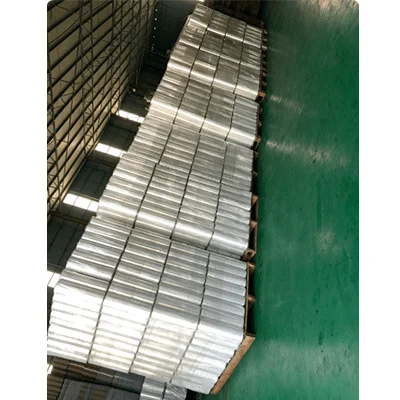
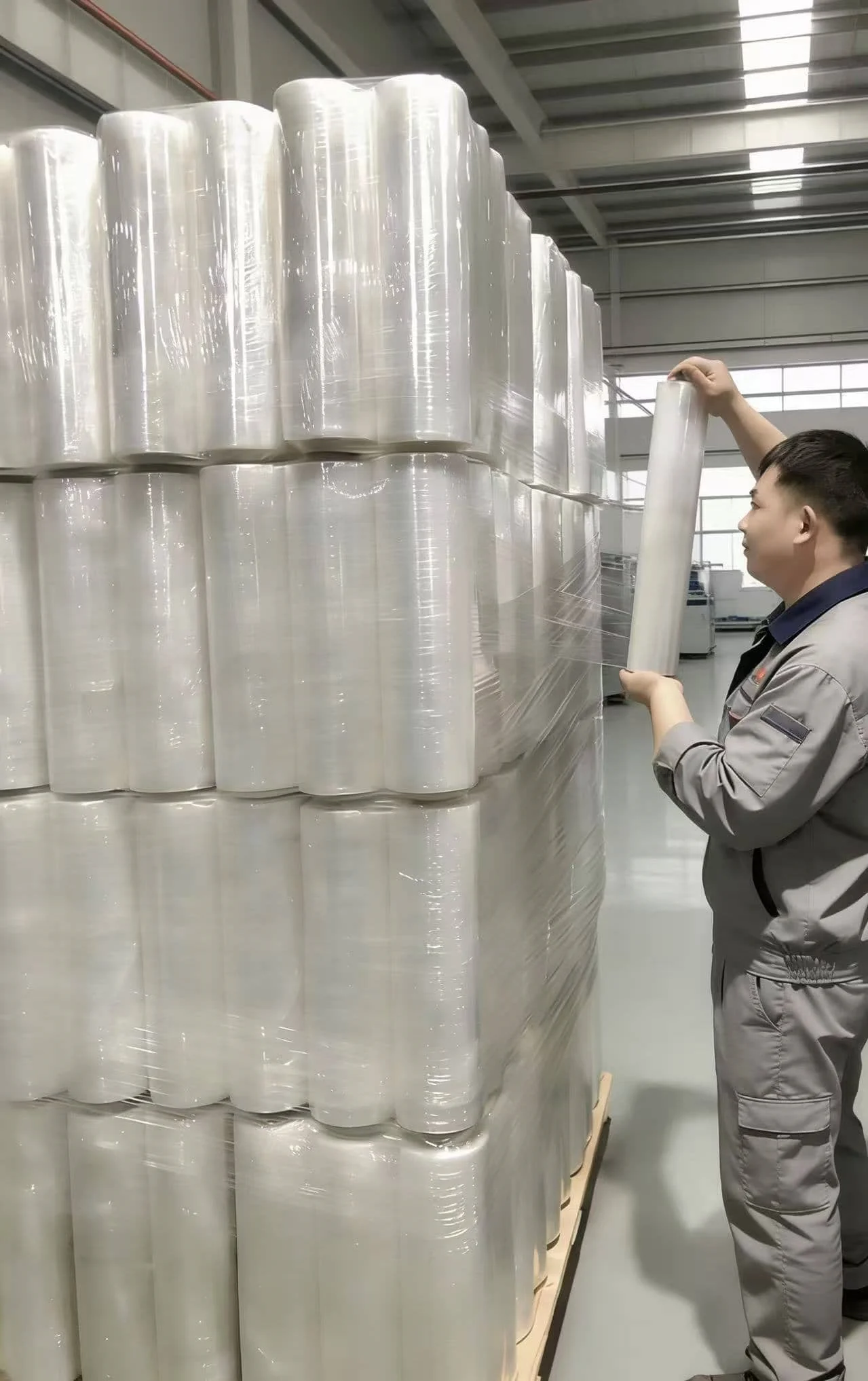
Plastic stretch film, also called stretch wrap, is a highly elastic plastic film used to wrap and secure products — most commonly on pallets — for storage and transportation. It works by being stretched around a load, where it grips tightly and holds everything in place through its own elastic recovery, rather than relying on heat, tape, or adhesive.
The defining property of stretch film is its elasticity. Unlike shrink wrap, which requires heat to shrink and seal, stretch film is applied at room temperature and tightens purely through mechanical stretching — either by hand or by a wrapping machine. Once wrapped, the film tries to return to its original size, which creates a strong inward holding force around the load.
This single property is what makes stretch film so widely used: it’s fast to apply, requires no special equipment for hand use, and provides strong load containment at a relatively low cost per pallet.
What Is Stretch Film Made Of?
The vast majority of stretch film is made from LLDPE — Linear Low-Density Polyethylene. This polymer is the base resin for stretch film production due to its advantages such as maximum stretch, strength, and tear resistance, which is why it has become the industry-standard material rather than older alternatives.
LLDPE is preferred over standard LDPE because it delivers a stronger, more puncture-resistant film at the same or even thinner gauge, while offering excellent elongation — typically stretching 200–300% without breaking, with premium nano-grade films reaching as high as 300–400%.
A small number of specialty films also incorporate other base resins. HDPE (High-Density Polyethylene) is sometimes used where additional strength and durability are required, since HDPE offers excellent puncture resistance for heavier items, though it generally comes at the cost of lower cling and flexibility compared to LLDPE.
To improve real-world performance, manufacturers also blend in functional additives during production:
- Tackifiersincrease the film’s self-cling, allowing each wrapped layer to grip the one beneath it without slipping
- UV stabilizersprotect the film from breaking down during outdoor storage or transit through high-sun environments
- Anti-static agentsprevent static buildup, which matters when wrapping electronics or sensitive components
- Colorantsare used for black opaque film (common for concealing high-value cargo) or for color-coded inventory sorting
If you want a deeper breakdown of the resin chemistry and additive types, see our guide on What Is Stretch Film Made Of.
How Does Plastic Stretch Film Work?
Stretch film’s job is straightforward: protect against dust, moisture, and environmental impacts while keeping items tightly packed during storage and transportation. But the mechanism behind that is worth understanding, because it explains why some films perform better than others.
When stretch film is applied — by hand or by machine — it’s pulled and elongated well beyond its relaxed length. Because LLDPE is engineered to be highly elastic, the film resists fully returning to its original shape. That residual tension is what generates the load containment force holding your pallet together.
This is also why pre-stretch ratio matters so much when comparing films. A film that’s pre-stretched by the manufacturer before it even reaches you requires less force to apply, while a true-gauge film (not pre-stretched) gives the operator more control over tension but takes more physical effort, especially for hand wrapping.
Good quality stretch film helps limit product movement, increase efficiency, and avoid possible accidents that lead to unnecessary damage — which is exactly why getting the right film matters as much as having a film at all.
Cast Film vs. Blown Film
Plastic stretch film is manufactured using one of two extrusion methods, and the difference shows up clearly in how the film performs:
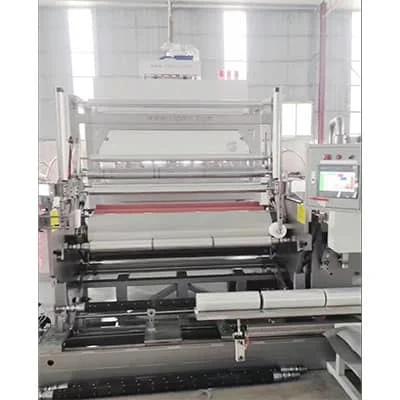
Cast film is produced by extruding molten LLDPE through a flat die onto a rapidly cooled roller. This produces a film with excellent clarity, a quiet unwind, and consistent thickness — a strong choice when you need to see barcodes or labels through the wrap.
Blown film is produced by inflating molten plastic into a bubble shape before flattening it. This process gives the film greater puncture resistance and more “memory” (it holds tension better over time), but it’s typically hazier and louder to unwind than cast film.
Neither type is universally “better” — the right choice depends on your load type. For a full side-by-side comparison, see Cast vs. Blown Stretch Film: What’s the Difference.
Common Types of Plastic Stretch Film
Stretch film isn’t a single product — it comes in several formats depending on how it’s applied and what it’s protecting.
Hand stretch film is wound onto a small core and applied manually using a handle or dispenser. It’s the most common choice for low-to-medium volume operations, retail back-rooms, and small warehouses.
Machine stretch film is designed for use with automatic or semi-automatic pallet wrappers. It’s typically engineered with a higher pre-stretch ratio and more consistent tension control, making it the standard for high-volume distribution centers.
Pre-stretched film has already been mechanically stretched during manufacturing. It requires less physical force to apply and can reduce material usage and cost for operations focused on efficiency.
Colored and black stretch film serves two purposes: opaque black film conceals high-value goods from view during transit, while colored film (blue, red, green) helps warehouse staff visually sort inventory by type, destination, or batch.
Where Is Plastic Stretch Film Used?
Stretch film’s applications span nearly every industry that ships or stores physical goods:
- Logistics and warehousing— securing palletized goods for transport between facilities
- Food and beverage— wrapping cases and pallets while maintaining product visibility
- E-commerce and retail distribution— protecting bulk shipments to fulfillment centers
- Manufacturing and industrial— wrapping machinery, metal parts, and irregular loads, often using puncture-resistant blown film
- Construction materials— bundling and protecting building materials during site delivery
Its wide range of applications makes stretch film ideal for industries ranging from food packaging to logistics, which is part of why it has become one of the most widely used packaging materials in global supply chains.
Is Plastic Stretch Film Recyclable?
Yes — most stretch film made from LLDPE is fully recyclable through standard plastic recycling programs, typically under resin code #4. That said, recyclability in practice depends on whether your local facility accepts flexible film packaging, since not all curbside programs do. Many large-scale distribution centers now have dedicated stretch film recycling streams due to the high volume they generate.
For buyers focused on sustainability, biodegradable and recycled-content (rLLDPE) stretch films are increasingly available as alternatives that reduce virgin plastic use while maintaining acceptable performance for standard pallet wrapping.
How to Choose the Right Plastic Stretch Film
Once you understand what stretch film is and how it works, choosing the right one comes down to a few practical questions:
- What’s the weight and shape of your typical load?Heavier or irregular loads need thicker, more puncture-resistant film.
- Hand or machine application?This determines whether you need standard hand film or a higher pre-stretch machine film.
- Indoor or outdoor storage?Outdoor or long-transit shipments benefit from UV-stabilized film.
- Does it need to be opaque?High-value or sensitive goods often ship in black stretch film for security.
For a full breakdown of thickness selection, see our Stretch Film Thickness Guide.
Final Thoughts
Plastic stretch film is a deceptively simple product with a lot of engineering behind it. Understanding what it’s made of, how the elasticity mechanism works, and which type fits your application puts you in a much stronger position when comparing suppliers and specifications — rather than just comparing price per roll.
Fo shan JYE Packaging Materials Co., Ltd manufactures LLDPE hand stretch film, machine stretch film, and pallet wrapping film for importers and distributors worldwide, with full specification sheets available for every product line.