

What Is Stretch Wrap Used For?
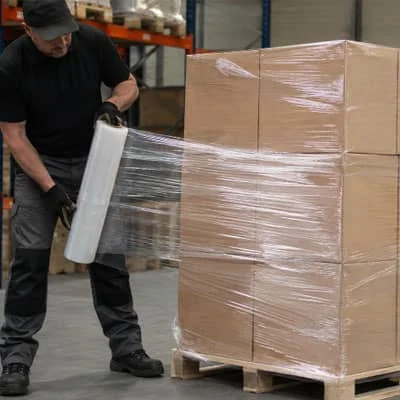
Stretch wrap is mainly used to hold products together, stabilize pallet loads, and protect goods during storage, handling, and transportation. It is commonly wrapped around cartons, bags, containers, furniture, building materials, and other packaged products to reduce movement and keep the load secure.
In warehouses and logistics operations, stretch wrap is especially important because it turns multiple cartons or individual products into a more stable unit. It can also protect packaged goods from dust, dirt, scratches, and light moisture while keeping labels and barcodes visible.
This guide explains the most common stretch wrap uses, the industries that rely on it, and how to choose the right film for a particular packaging operation.
What is stretch wrap?
Stretch wrap, also called stretch film, is a highly stretchable plastic packaging film that is pulled tightly around products or palletized goods.
Most stretch film is manufactured from linear low-density polyethylene, commonly known as LLDPE. When the film is stretched, its elastic recovery creates tension around the load. The film also clings to itself, allowing it to stay in place without heat or adhesive tape.
Unlike shrink film, stretch wrap does not need a heat gun or shrink tunnel. It is applied at room temperature, either manually or with an automatic or semi-automatic pallet wrapping machine.
For a more detailed explanation of its materials and working principle, read our guide to what plastic stretch film is and how it works.
What is stretch wrap used for?
The main purpose of stretch wrap is load containment. However, businesses use it for several related packaging tasks.
Securing products on pallets
Pallet wrapping is the most common use of stretch wrap.
Cartons, bags, buckets, bottles, and other packaged products can shift when a pallet is lifted by a forklift, loaded into a truck, or transported over an uneven road. Stretch film creates holding force around the load and helps keep the products together as one palletized unit.
Correct pallet wrapping can help:
Reduce carton movement
Improve pallet stability
Prevent products from falling during handling
Keep stacked goods together
Support safer warehouse and transport operations
Reduce product damage caused by shifting loads
Businesses that regularly prepare goods for shipping can explore suitable pallet stretch film products for manual and machine wrapping applications.
Protecting goods during storage
Stretch wrap creates an external protective layer around packaged products.
It helps prevent warehouse dust, dirt, and debris from reaching cartons and product surfaces. It can also reduce scratches caused by routine handling and provide limited protection against light moisture or brief exposure during loading and unloading.
However, standard stretch film should not be treated as completely waterproof packaging. Products stored outdoors or exposed to heavy rain may need waterproof covers, top sheets, UV-resistant film, or other protective materials.
Stabilizing loads during transportation
Goods may pass through several stages before reaching the customer, including palletizing, warehouse storage, forklift handling, container loading, road transportation, unloading, and distribution.
Stretch wrapping helps maintain load stability throughout these stages. A stable load is less likely to lean, collapse, or experience excessive movement inside a truck or shipping container.
Exporters often use stretch film together with pallets, edge protectors, straps, anti-slip sheets, or corner boards to create a more complete transport-packaging system.
Bundling cartons and smaller products
Stretch wrap can bundle multiple items together without permanently attaching them.
Common examples include:
Grouping several cartons for internal movement
Bundling tubes, profiles, boards, or long products
Holding loose components together
Combining small packages into one handling unit
Securing products to trays
Preparing mixed orders for warehouse transfer
Mini stretch film is often used for small packages and narrow products, while standard hand rolls are more suitable for cartons and pallets.
Wrapping irregularly shaped products
Not every product fits neatly into a rectangular carton. Stretch wrap can conform around products with unusual shapes, making it useful for furniture, machinery components, metal parts, building materials, and other industrial goods.
Irregular products may have corners or protruding sections that can puncture ordinary film. For these applications, buyers should consider film strength, puncture resistance, load shape, edge protection, and wrapping tension—not only film thickness.
Heavy, sharp, or irregular loads may require a heavy-duty or blown stretch film. See our comparison of blown and cast stretch film before selecting a film structure.
Keeping products clean during moving or renovation
Stretch wrap is also used by moving companies, furniture businesses, contractors, and homeowners.
It can hold protective blankets around furniture, bundle removable parts, keep drawers closed, and protect finished surfaces from dust and minor scratches. Because stretch film clings to itself, it can often be removed without leaving adhesive residue on the packaged product.
Stretch wrap should not be applied directly to delicate painted, polished, leather, or moisture-sensitive surfaces unless compatibility has been tested. A protective paper, foam, blanket, or other barrier may be needed underneath the film.
Concealing valuable or sensitive goods
Clear stretch film is useful when warehouse staff need to see carton labels, barcodes, product markings, or pallet contents.
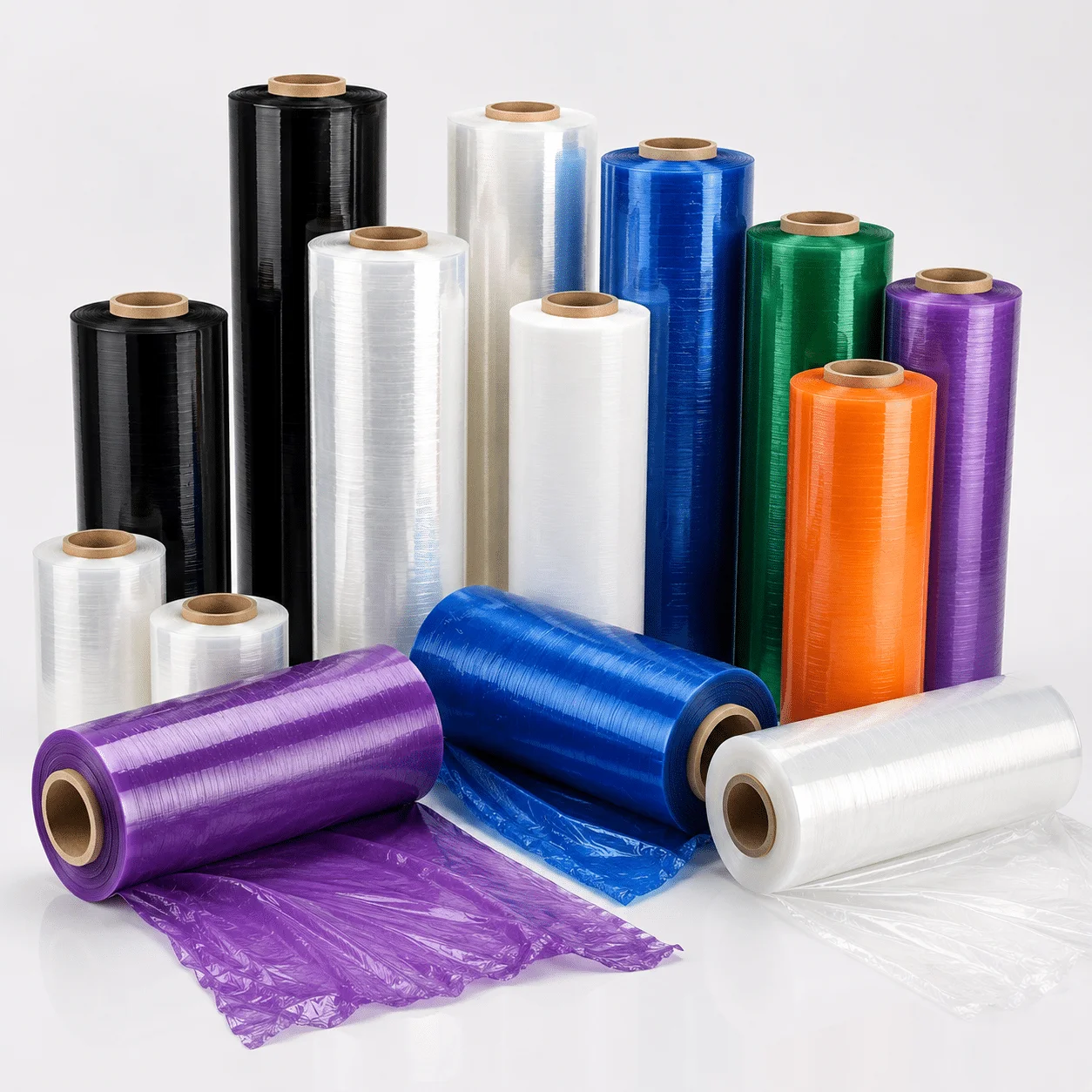
Black and colored stretch film can be used when visibility is not desirable. Opaque film helps conceal pallet contents during storage and transportation, which can provide additional privacy for valuable or sensitive shipments.
Colored film can also support:
Warehouse zoning
Inventory classification
Batch identification
Destination coding
Product separation
Customer-specific packaging
Brand presentation
Learn more about black stretch film for pallet packaging.
Improving packaging efficiency
Stretch wrap can be applied quickly and does not require heat sealing for normal pallet containment.
For low or changing packaging volumes, operators can use hand rolls with a dispenser. For higher production volumes, machine stretch film can be used with automatic or semi-automatic wrappers to provide more consistent tension and faster application.
Selecting the right film can also reduce:
Film breaks
Excessive wrapping layers
Operator fatigue
Packaging time
Film waste
Product damage
Cost per wrapped pallet
The cheapest roll is not always the most economical choice. Buyers should compare film consumption, packaging speed, breakage rate, and load stability per pallet rather than relying only on the price per roll.
Which industries use stretch wrap?
Stretch wrap is used across almost every industry that stores, handles, or transports physical goods.
Warehousing and logistics
Warehouses use stretch wrap to consolidate pallet loads, secure mixed cartons, protect inventory, and prepare products for dispatch.
Third-party logistics companies also use it when repacking, cross-docking, consolidating orders, and transferring goods between warehouses or distribution centers.
Manufacturing
Manufacturers use stretch film to wrap raw materials, finished products, spare parts, machinery components, and production supplies.
Industrial loads may be heavy or irregular, so puncture resistance and load-holding performance are particularly important.
Food and beverage distribution
Food and beverage businesses commonly stretch-wrap cases, trays, bottles, cans, and cartons on pallets.
The film is normally used as external transport packaging rather than direct food-contact packaging. Buyers who require direct food contact should verify that the exact material and formulation meet the relevant regulations for their market.
E-commerce and retail
Retail and e-commerce distribution centers use stretch film to consolidate products, secure outbound pallets, organize return shipments, and protect cartons during internal warehouse handling.
Clear film allows workers to inspect product labels, while colored film can help separate orders, destinations, or product categories.
Furniture and appliances
Furniture, home appliances, cabinets, mattresses, doors, and assembled products may be wrapped to reduce dust, scratches, and movement during storage or delivery.
Stretch wrap is often combined with foam, corrugated board, corner protection, or moving blankets because film alone may not provide sufficient impact protection.
Construction materials
Stretch wrap can bundle and protect tiles, panels, flooring products, pipes, insulation, profiles, and other building materials.
Because many construction products are heavy or have sharp edges, the film must be selected according to the actual load condition. Edge protectors or straps may also be required.
Printing and paper products
Printers and paper-product manufacturers use stretch wrap to protect cartons, paper rolls, books, printed materials, and finished packages from dust and movement.
The film must be applied carefully to avoid crushing or deforming pressure-sensitive products.
Types of stretch wrap for different uses
The correct film depends on how it will be applied and what it needs to protect.
Hand stretch film
Hand stretch film is applied manually. It is suitable for warehouses, packing stations, retail operations, moving services, and businesses with low-to-medium daily wrapping volumes.
It is useful when:
Pallet sizes change frequently
Products are wrapped in different locations
A wrapping machine is not available
Daily pallet volume is relatively low
Operators need flexible manual application
Machine stretch film
Machine stretch film is manufactured for automatic or semi-automatic wrapping equipment.
It is commonly used in factories, fulfillment centers, beverage plants, large warehouses, and other high-volume packaging operations.
Machine film can provide:
Faster wrapping
More consistent tension
Repeatable wrapping patterns
Higher pre-stretch capability
Reduced manual labor
More predictable film consumption
The film must match the machine model, film carriage, core diameter, roll size, and pre-stretch settings.
Pre-stretched film
Pre-stretched film has already been mechanically stretched during manufacturing.
It requires less pulling force during manual application and can help reduce operator fatigue. It may also improve wrapping consistency and lower film consumption for suitable loads.
However, pre-stretched film is not appropriate for every pallet. Heavy or unstable loads may require greater containment force.
Clear stretch film
Clear film is the standard choice for general warehouse and logistics applications.
It keeps labels, barcodes, carton markings, and pallet contents visible, supporting inventory checks and product identification.
Black and colored stretch film
Black stretch film helps conceal valuable or sensitive products. Other colors can be used for inventory coding, product classification, shipment identification, and branding.
Heavy-duty stretch film
Heavy-duty film is designed for demanding applications such as heavy pallets, irregular loads, construction materials, machinery components, and sharp-edged products.
Film thickness alone does not determine performance. Resin quality, stretch ratio, tear resistance, puncture resistance, cling, and load retention should also be evaluated.
CTA: Explore Our Stretch Film Products
How to choose stretch wrap for your application
Choosing the right stretch wrap begins with understanding the complete load and packaging process.
Evaluate the load weight
Light cartons generally require less containment force than heavy industrial goods.
However, weight should not be considered alone. A heavy but uniform pallet may sometimes be easier to wrap than a lighter load with irregular cartons, overhanging products, or sharp corners.
Examine the load shape
Determine whether the pallet contains:
Uniform cartons
Mixed-size boxes
Bags
Bottles or cans
Drums or containers
Furniture
Building materials
Machinery components
Sharp metal products
Goods extending beyond the pallet
Irregular shapes and sharp corners increase puncture risk and may require stronger film or additional edge protection.
Choose hand or machine application
Use hand film for manual wrapping and flexible, lower-volume operations.
Use machine film when wrapping pallets with automatic or semi-automatic equipment. Machine users should provide the supplier with the machine model, pre-stretch setting, film width, core size, and current wrapping problems.
Read our guide to hand versus machine stretch film for a more detailed comparison.
Select a suitable film thickness
Film thickness is normally measured in microns or gauge.
As a general starting point, lighter and more uniform carton loads may use thinner film, while general shipping pallets and heavier products may require a stronger grade. Sharp or irregular loads should be evaluated through actual testing rather than thickness alone.
Our stretch film thickness guide explains how load shape, cargo weight, puncture risk, and wrapping method affect film selection.
Consider the storage and transport environment
Tell the supplier whether the goods will be:
Stored indoors or outdoors
Shipped domestically or internationally
Loaded into trucks or containers
Exposed to sunlight
Handled multiple times
Stored for an extended period
Transported in hot or cold conditions
Outdoor storage or prolonged sunlight exposure may require UV-stabilized film and additional weather protection.
Test the film on an actual pallet
Before placing a large order, test the proposed film under normal operating conditions.
Record:
Film breaks per pallet
Number of wrapping layers
Film consumption per pallet
Wrapping time
Corner punctures
Cling performance
Operator handling
Machine compatibility
Load movement
Condition after transport
Testing provides more useful purchasing information than comparing roll prices alone.
How is stretch wrap applied?
Stretch film can be applied manually or by machine.
For basic manual pallet wrapping:
Make sure the products are stacked securely on a suitable pallet.
Anchor the film around the pallet base or lower section of the load.
Wrap the bottom several times to create a stable foundation.
Move upward while maintaining controlled film tension.
Overlap each film layer to avoid unprotected gaps.
Reinforce corners, unstable sections, and the top of the load where necessary.
Finish the wrap and press the film end against the previous layer.
Do not pull the film so tightly that cartons are crushed or products are deformed. At the same time, loose application may fail to create sufficient load containment.
Stretch wrap vs. shrink wrap
Many people mistake stretch wrap for shrink wrap, but these two packaging films serve different purposes and work in different ways.
Stretch wrap uses its elasticity and self-clinging properties to secure products or pallets tightly. Operators apply tension during wrapping, and the film holds the load together without requiring heat.
Shrink wrap works differently. Users first place the film around a product, then apply heat to make the material contract and form a tight protective layer around the item.
Businesses commonly choose stretch wrap for pallet stabilization, warehouse handling, and transportation. In contrast, shrink wrap is more suitable for retail packaging, multipacks, and products that need a tight, sealed appearance.
Why work with a professional stretch wrap manufacturer?
A professional manufacturer can recommend a film based on the actual load rather than offering only a standard roll.
Important supplier capabilities include:
Stable raw-material sourcing
Consistent film thickness
Reliable stretch and cling
Puncture-resistance testing
Hand and machine film options
Customized widths and roll lengths
Different core sizes
Clear and colored film
OEM labels and private-label cartons
Export packaging
Sample testing
Technical support
JYE Stretch Wrap is a Foshan-based packaging materials manufacturer specializing in PE stretch film solutions for logistics, warehousing, industrial packaging, and shipping applications.
According to the current JYE company profile, the company has approximately 10 years of stretch film manufacturing experience, a production facility of about 10,000 square meters, more than 50 employees, and two cast stretch film production lines operating continuously.
The published company information also states a monthly production capacity of up to 500 tons, exports to more than 50 countries, and long-term cooperation with more than 200 customers.
JYE supplies hand stretch film, machine stretch film, pre-stretched film, pallet wrap, clear and colored film, and customized packaging formats. Buyers can discuss film thickness, width, length, roll weight, core size, color, labels, cartons, and private-label requirements according to their market and packaging operation.
Browse the complete stretch film product range or contact the JYE team to discuss a suitable specification.
Frequently asked questions
What is the main purpose of stretch wrap?
The main purpose of stretch wrap is to hold products together and stabilize loads during storage, handling, and transportation. Pallet wrapping is its most common application.
Can stretch wrap protect products from water?
Stretch wrap can help protect packaged goods from light moisture, dust, and dirt, but standard stretch film is not a complete waterproof packaging system. Outdoor products may need a waterproof cover or additional protective packaging.
Can stretch wrap be used for moving furniture?
Yes. Stretch wrap helps hold moving blankets in place, keeps drawers closed, bundles removable parts, and protects furniture from dust and minor scratches. When you wrap delicate surfaces, add a protective layer underneath the film to prevent possible damage.
Is stretch wrap the same as shrink wrap?
No. Stretch wrap uses its elastic properties to secure goods tightly and does not normally require heat. Shrink wrap works differently because heat causes the film to shrink tightly around the product.
Is clear or black stretch wrap better?
Clear stretch wrap works better when workers need to see labels and products during storage or transportation. Black stretch wrap provides better privacy, helps conceal valuable goods, and can reduce light exposure. The right choice depends on your specific packaging needs.
How many layers of stretch wrap should be used?
There is no universal number of layers for every pallet. The ideal wrapping pattern depends on the load weight, shape, stability, film strength, wrapping tension, transport conditions, and whether you use edge protectors or straps.
Can stretch wrap be recycled?
Many recycling facilities accept standard LLDPE stretch film when they collect clean flexible polyethylene materials. To improve recycling results, keep used film clean and dry, and follow your local recycling guidelines.
What information should I send when requesting a quotation?
Provide the supplier with:
Hand or machine application
Pallet dimensions
Approximate load weight
Product type
Load shape
Presence of sharp edges
Required film thickness and width
Roll length or roll weight
Core diameter
Clear or colored film
Order quantity
Destination country and port
OEM or private-label requirements
Conclusion
The correct film depends on the cargo weight, load shape, wrapping method, puncture risk, storage environment, and transport conditions. Instead of choosing film based only on thickness or roll price, businesses should test its actual performance and calculate the total packaging cost per pallet.
Foshan JYE Packaging Materials Co., Ltd. supplies customized stretch film solutions for importers, distributors, logistics companies, warehouses, and industrial buyers.
Contact JYE Stretch Wrap with your pallet dimensions, cargo weight, wrapping method, required specifications, and order quantity to request a recommendation, sample, or wholesale quotation.